Japan Ski Touring – Guided Backcountry Trips in Hakuba & Myoko
Trip Overview & Availability
Location
duration
7 ski-days, 8 nights
Price per person
CAD $5,480
USD $3,940
AVAILABLE DATES
2027
January 7-15th (4 spots left)
January 16-24th (Sold Out)
Jan. 24-1st Feb. (Reserved)
February 3-12th (5 Avail)*
February 13-21st (Sold Out)
Feb. 21-1st March (6 Avail)
Group Discounts 4-6 ppl.
* 1 day off between Locations
Steep Alpine, Deep Japow & Maximum Vertical
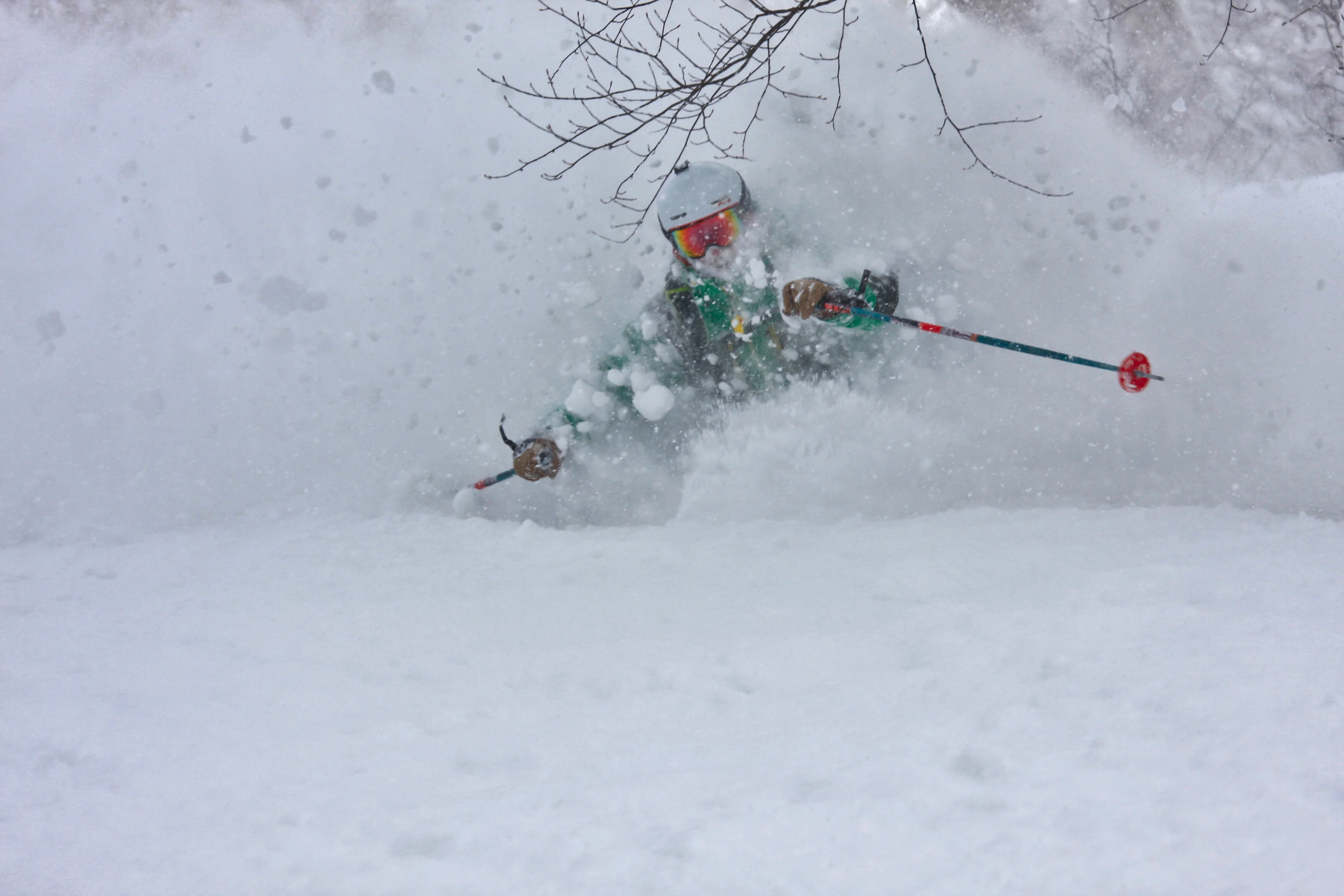
Japan’s legendary powder, epic terrain, rich cuisine, and soothing onsens, all set against a striking blend of ultra-modernism and ancient tradition.
Our small group of six is led by a certified ACMG ski guide with deep knowledge of Japan’s expansive backcountry, using numerous resorts to access the best terrain for the day’s conditions.
It’s no secret that Hakuba & Mt. Myoko are famous for their abundance of deep, dry powder, but few people realize that this is also Japan’s premier big-mountain destination, with some of the most accessible and consistently skiable steep alpine and treeline terrain in the country.
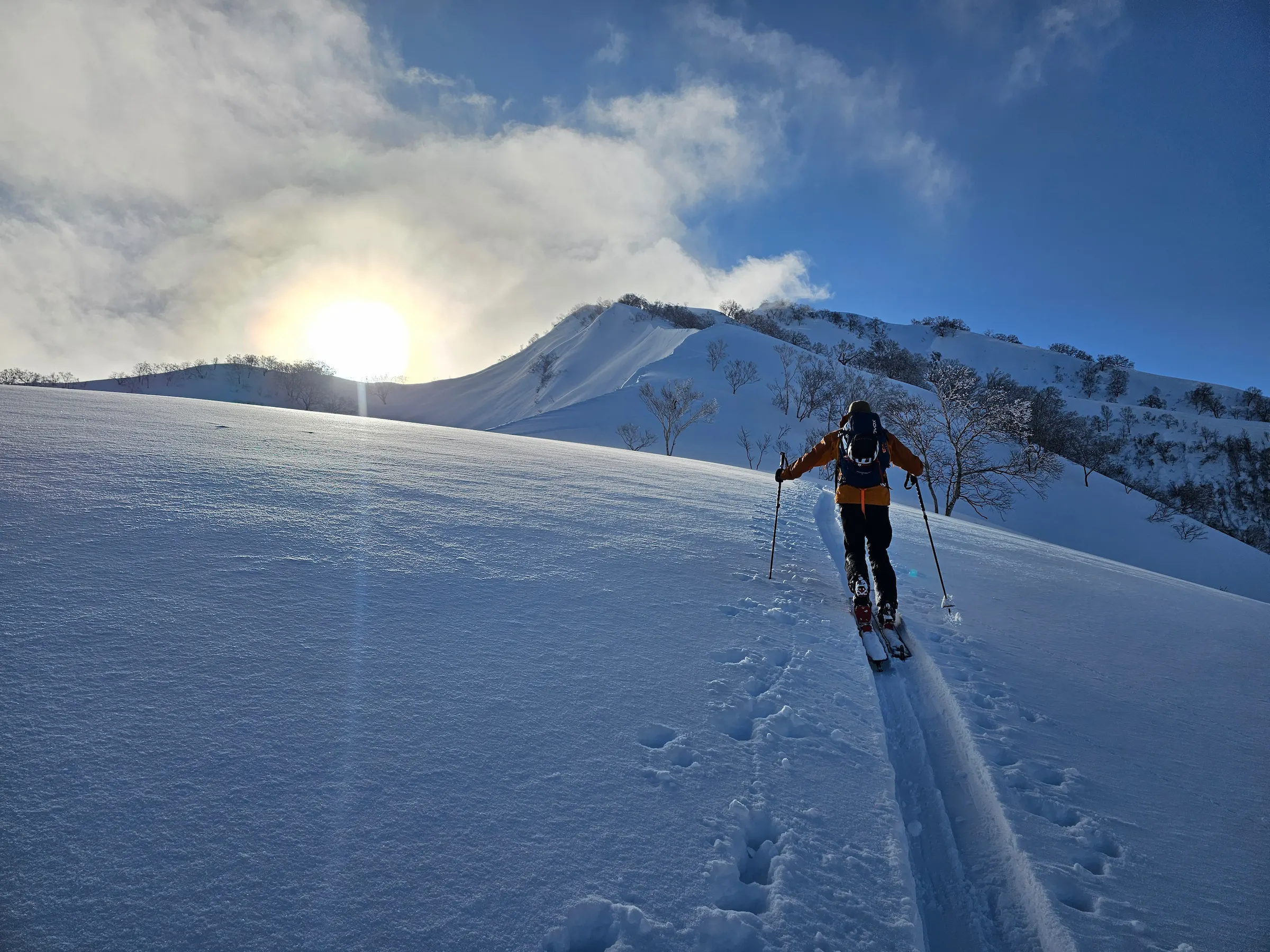
Designed for experienced backcountry skiers and riders who wants to maximize their backcountry experience in Japan. This program prioritizes untracked powder, engaging terrain, and the quieter corners of Hakuba and Myoko that most visitors never see. By combining strategic lift use with shuttle-supported logistics, we typically ski significantly more vertical than we climb, allowing us to focus our energy on finding exceptional snow and memorable descents.
Why Japan Just Works
“What makes these trips so successful is simple: regular & consistent high-quality snow, a relatively stable snowpack, and easy access to a huge variety of terrain. The icing on the cake? Lift access for maximum vertical, and full immersion in a culture that’s as rich and fascinating as the skiing.”
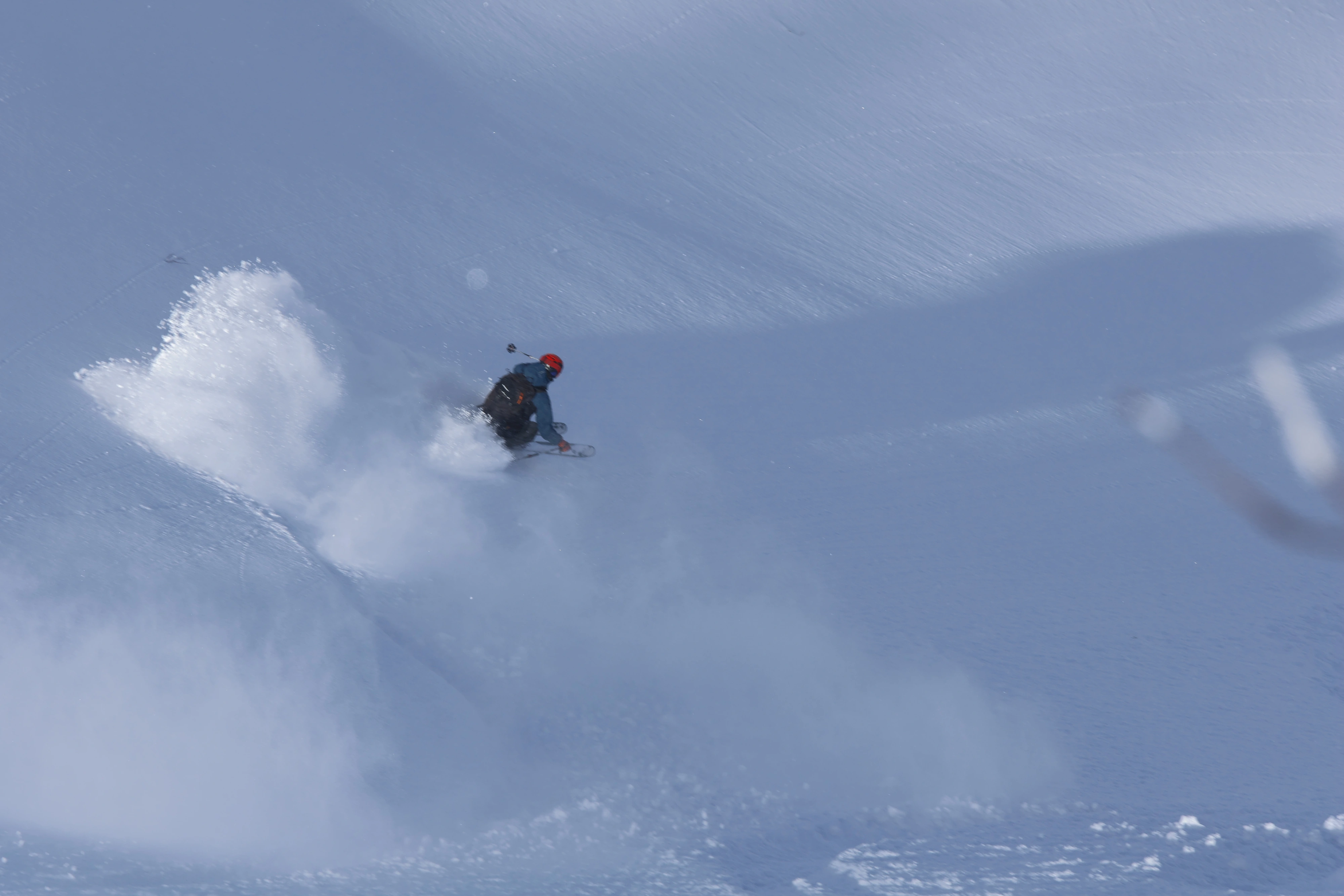
The trip includes two distinct locations of Hakuba and Mt. Myoko, each offering unique terrain, atmosphere, and character.
What’s Included?
Certified ACMG ski guide with expertise in Japan’s terrain & avalanche conditions
Dedicated Tail Guide - aspirant ACMG Ski guide
Day 1 safety briefing + avalanche rescue training
Small group (max 6) for agility in complex terrain
7 guided ski days — 4 in Hakuba, 3 in Myoko (lift-assisted touring)
All lift tickets included for backcountry & slackcountry access
8 nights twin-share lodging (4 nights chalet, 4 nights lodge)
Private 8-seat 4WD van with guide-driver for resorts, onsens & dinners
Shuttle pickups after long descents away from resorts
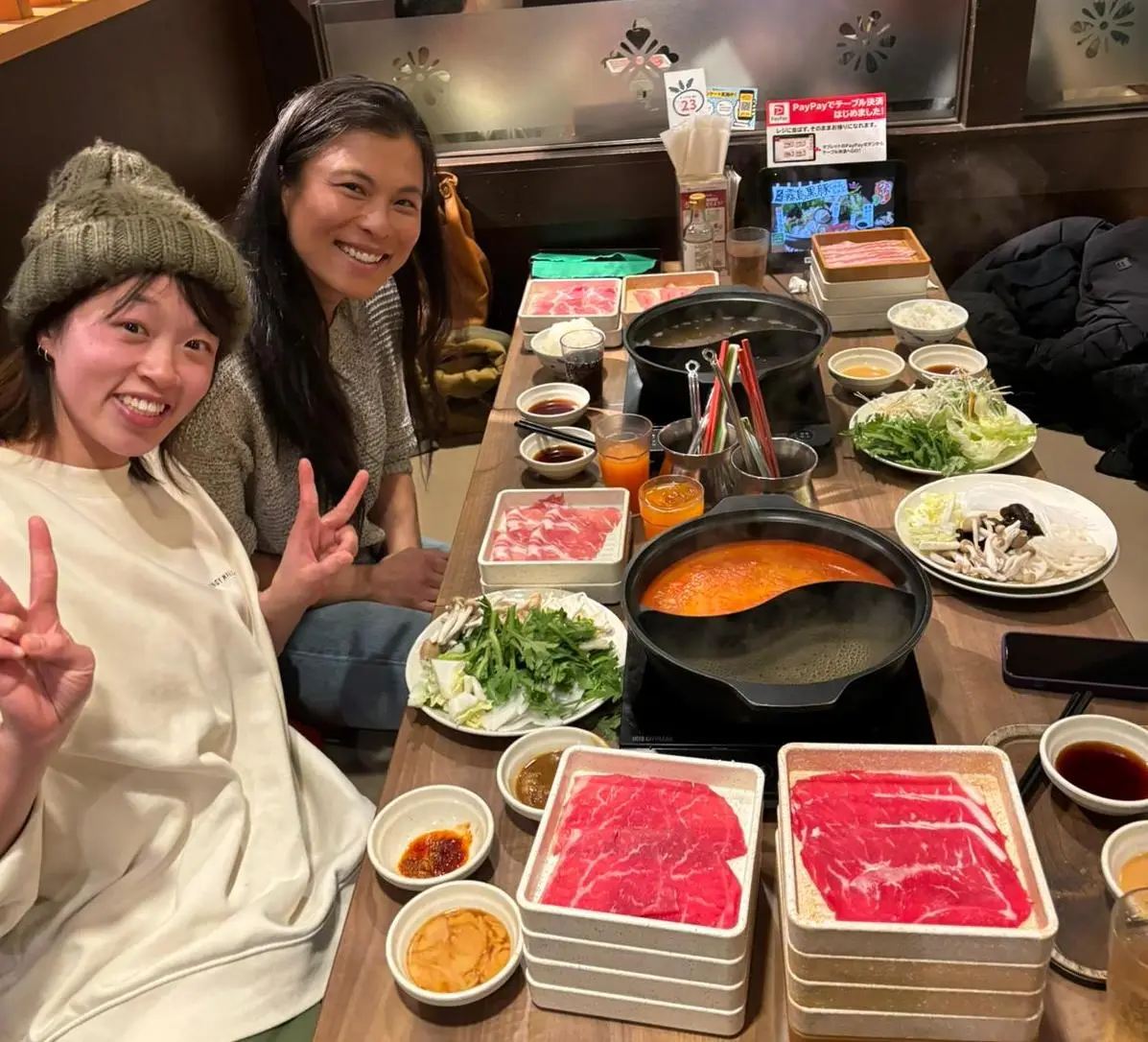
Top restaurants pre-booked for unforgettable dining
On-the-ground support fluent in Japanese for logistics & emergencies
Step-by-step travel guidance from Narita/Haneda to Hakuba/Myoko (incl. ski bag transfer)
Japanese Alps: World-Class Terrain, Big Vertical & a Cultural Juxtaposition
The Japanese Alps are my favourite place to ski and guide, thanks to consistently reliable snow, a relatively stable snowpack, and an abundance of world-class terrain. Frequent cold storms bring light, dry powder, with 12-hour snowfall totals regularly reaching 30–60 cm (1–2 ft). With only short breaks between systems, the backcountry enjoys a seemingly endless supply of fresh snow. Backcountry access is remarkably efficient, and the volume of high-quality, easily reachable terrain makes every day in the mountains a pleasure. Nowhere else do I consistently ski such steep, engaging lines with this level of snow quality.
Japanese Alps Verses Hokkaido
I'm often asked why I choose the Japanese Alps over Hokkaido. The answer is simple: terrain. The Japanese Alps deliver greater vertical relief, consistently steeper lines, and a broader range of terrain that’s both varied and compelling. As a classic faulted mountain range (with a few volcanoes thrown in), peak elevations reach 2,700–3,190m, compared to Hokkaido’s 2,000–2,291m volcanic peaks. The result is more vertical skied on steeper more interesting lines.
From Shinkansen Bullet Train to a 1930s Fixed Chairlift
Japan’s culture is as inspiring as its backcountry skiing. The blend of cutting-edge modernity and deep-rooted tradition creates a unique atmosphere. There's a profound respect for social harmony, attention to detail, and an incredible dedication to mastery, whether it’s in cuisine, public transport, or craftsmanship. One of my favourite contrasts is riding the ultra-modern Shinkansen bullet train from Tokyo, then hopping onto a single fixed chairlift in a quiet Mt. Myoko resort. It's this combination of world-class skiing and rich cultural experience that makes skiing in Japan so special.
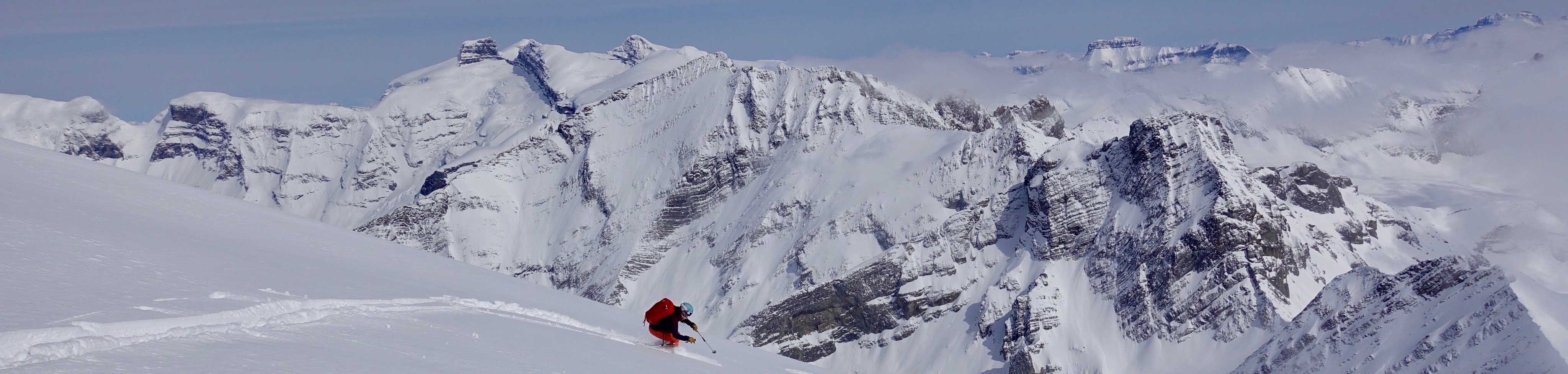
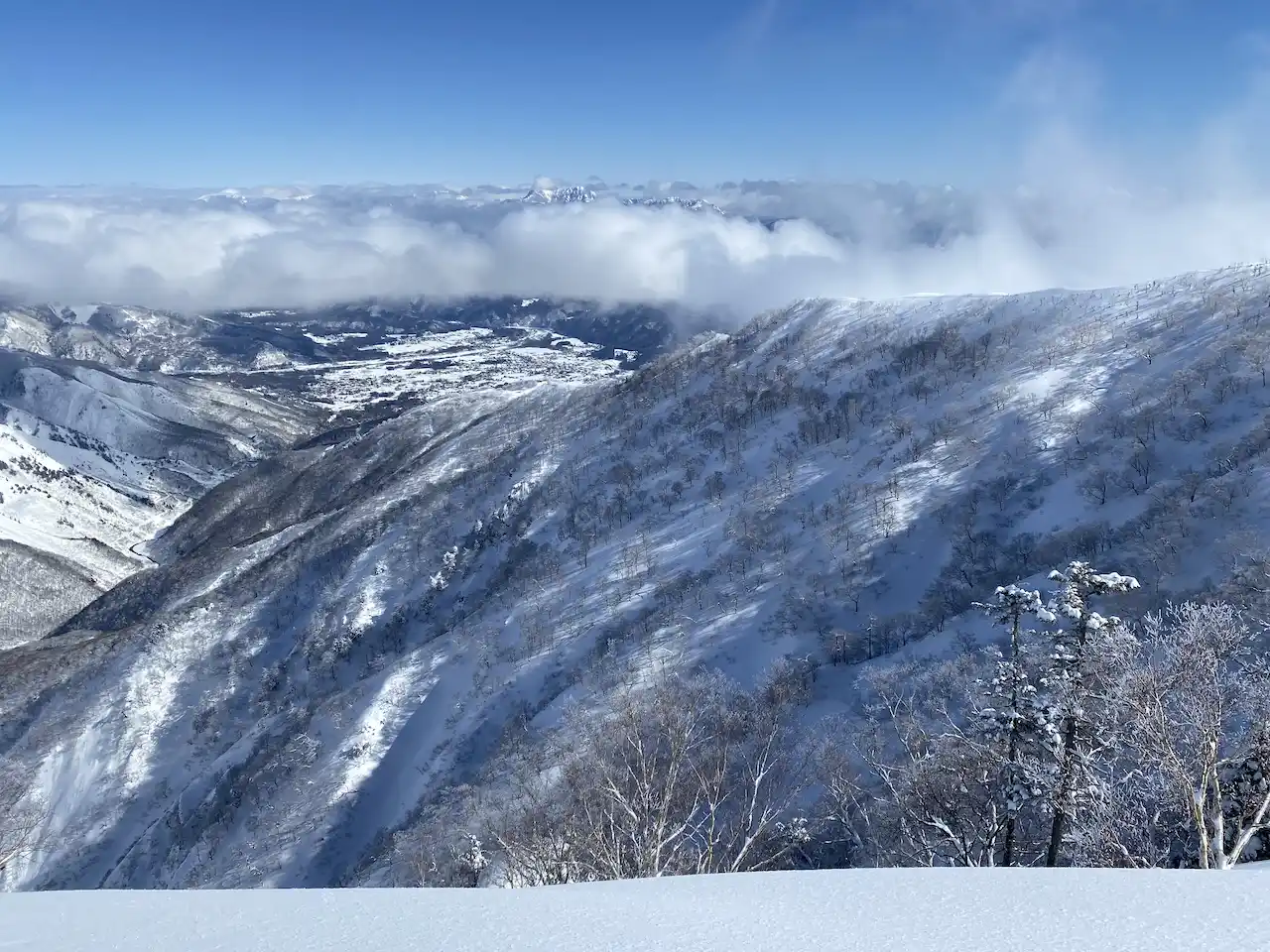
Hakuba Valley & Mt. Myoko: History, Culture & Backcountry Access
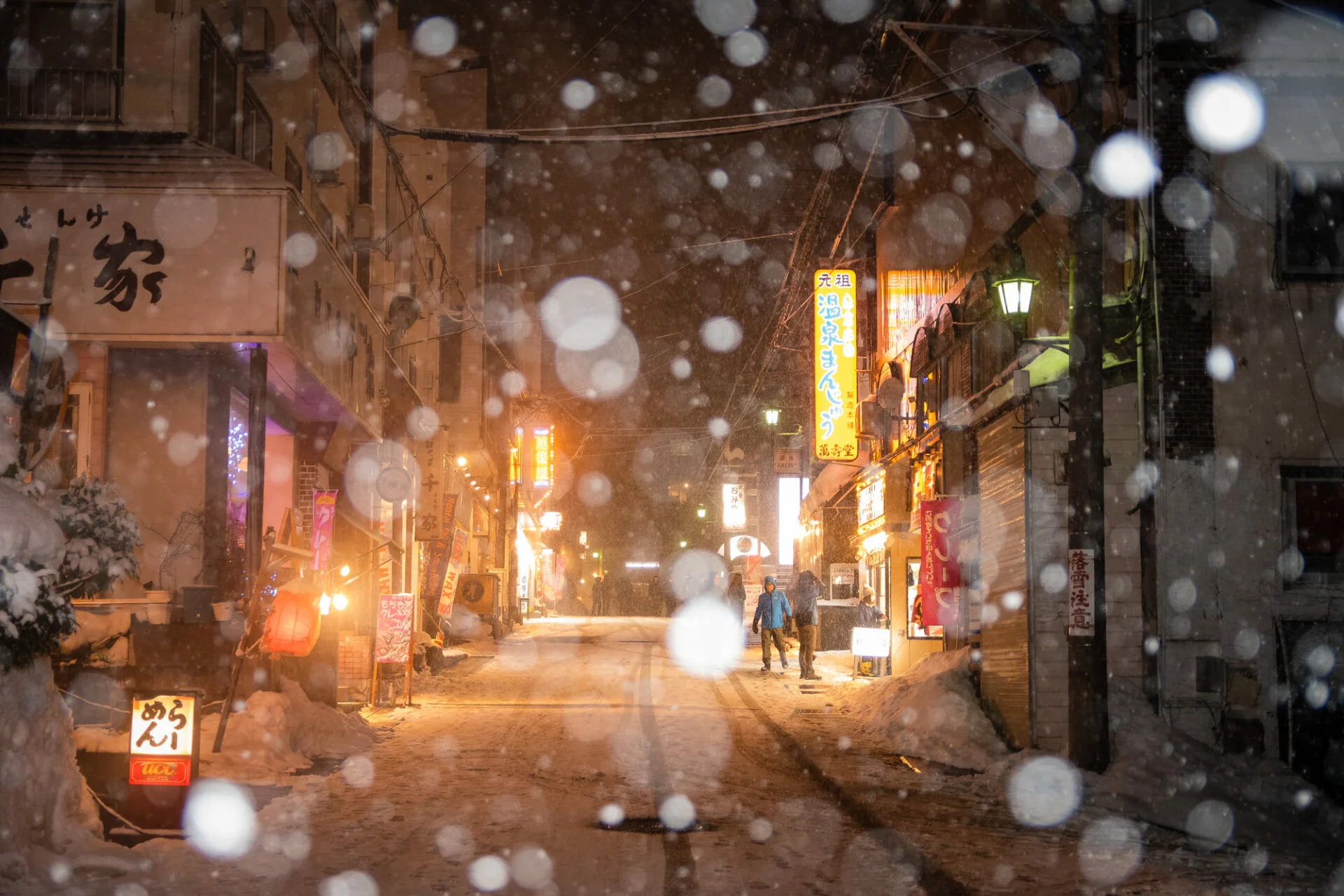
Hakuba Valley is home to 10 small to medium-sized ski resorts, many of which are older compared to modern Western counterparts. Each resort is independently owned by numerous local stakeholders, which has so far prevented acquisition by Vail Resorts. Resort infrastructure has seen little modernization or expansion following the bursting of the asset price bubble and real estate market collapse in the early 1990s. However, the town of Hakuba has steadily evolved to accommodate the Western ski market, all while retaining its authentic Japanese character. It’s a lively town with excellent restaurants and bars catering to both locals and visitors across a wide range of budgets.
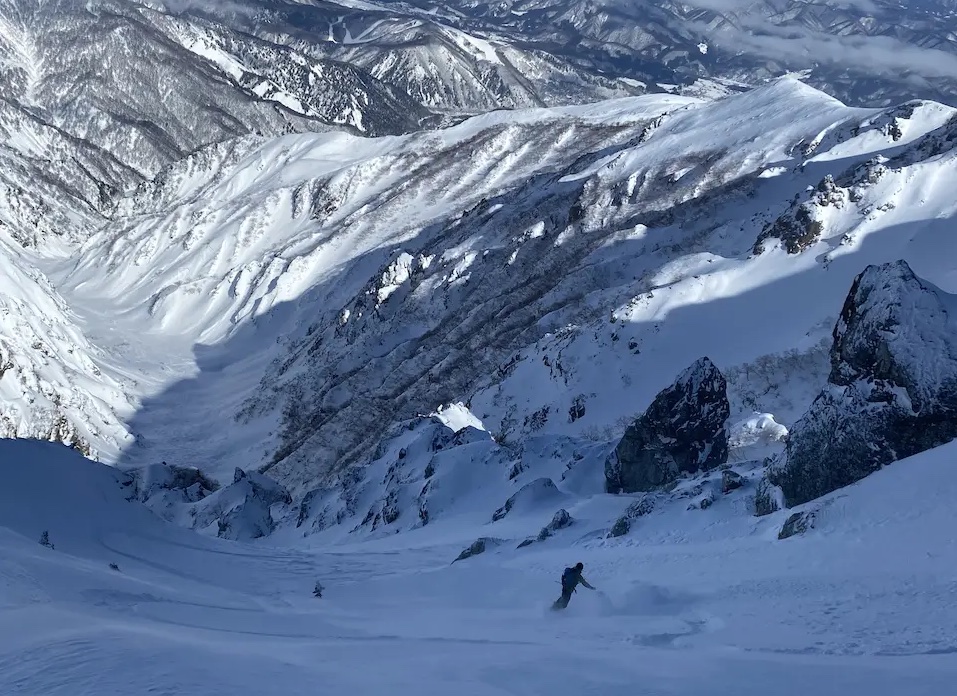
Endless Terrain Options, Efficient Access, & Maximum Vertical
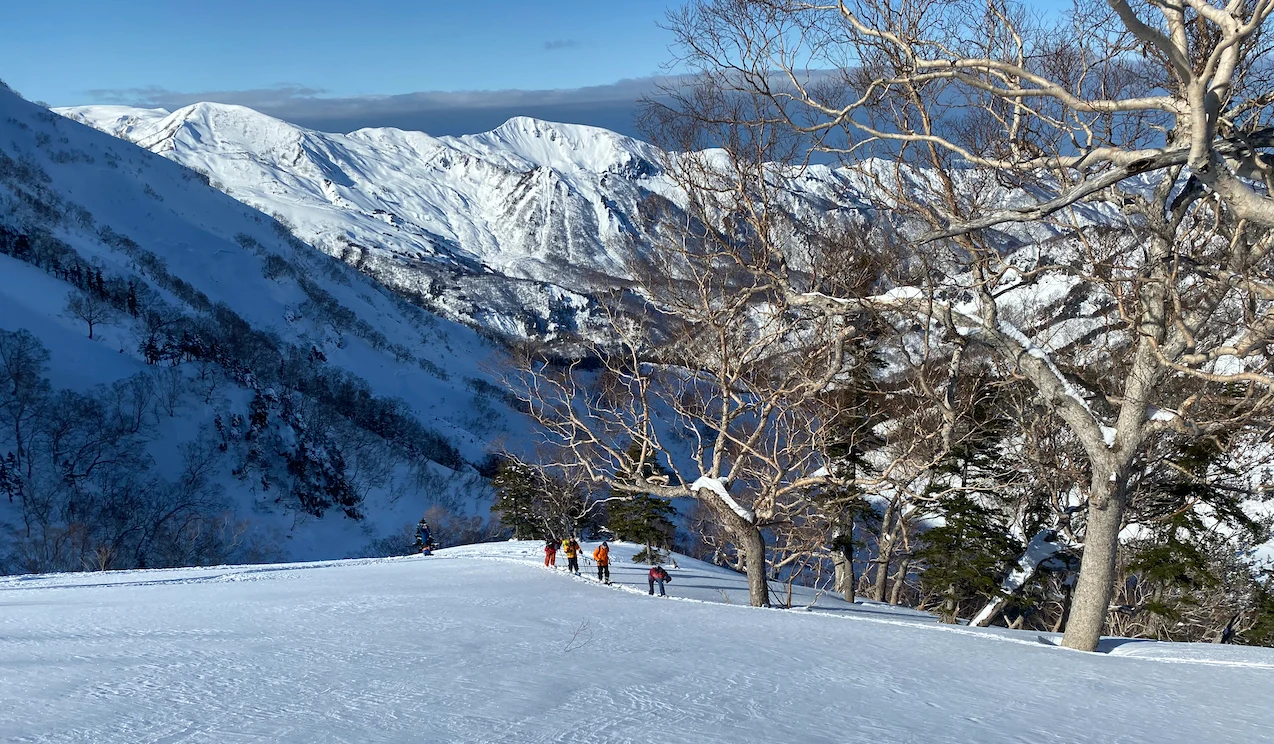
Most ski resorts in the area are geographically small, with terrain and boundaries that generally stick to the lower-angle sections of the range or isolated to a narrow strip of terrain. This layout means lifts and gondolas provide direct access to a wide variety of ideal ski touring zones, without the long valley approaches typical of many backcountry areas around the world. With cold snowfall right to the valley bottom, minimal efforts are rewarded with a lot of vertical decent.
On some days, I take advantage of this “low-hanging fruit”: after riding the lifts into the alpine, a short 20–30 minute skin leads to a drop-in point for a 940 m (3,083 ft) descent. At the bottom, we cross a creek, glide along a service road, and meet our shuttle on a plowed road for a quick 10-minute ride back to the base—ready to do it all again.
Other days are more involved: we use the lifts once in the morning, then head deeper into the backcountry, linking multiple 1–1.5 hour ascents, interspersed with ski descents. Between these two approaches, there are countless variations, from lift-accessed backcountry storm skiing to single big climbs to summits, followed by long, rewarding descents. Whatever the day holds, the ratio of ski descent to climbing effort is always high.
For more detailed information about my guiding approach, see the FAQs and the section titled Who Is This Trip For?
Mount Myoko
Mt. Myoko is a classic, cone-shaped active stratovolcano located just a few hours' drive north of the Hakuba Valley. The volcano has a classic central plug that forms the spectacular summit. Pyroclastic flows along the eastern and northern flanks have created distinct geological features that enhance the area’s terrain diversity.
Five ski resorts are scattered across its lower flanks; like those in Hakuba, they tend to avoid the steeper terrain and none extend up to the crater rim. I use a variety of these resorts as access points to reach prime ski touring terrain.
The town of Akakura, built into the lower slopes of the volcano, is small and fairly unremarkable, offering only basic services and a limited selection of restaurants. Some remnants of the 1980s real estate collapse are still visible throughout the area. While Myoko does attract Western tourists, it lacks the buzz and crowds of Hakuba, offering a quieter, more laid-back atmosphere.
Dining options are more modest, but two of my favourite restaurants, both deeply traditional Japanese, can be found here. Mount Myoko also sits near one of the snowiest regions on Earth, which is evident in the frequent overnight snowfalls of 60 to 80 cm. I've even experienced a 100 cm dump overnight.
The Terrain: A Backcountry Playground for Skiers & Riders
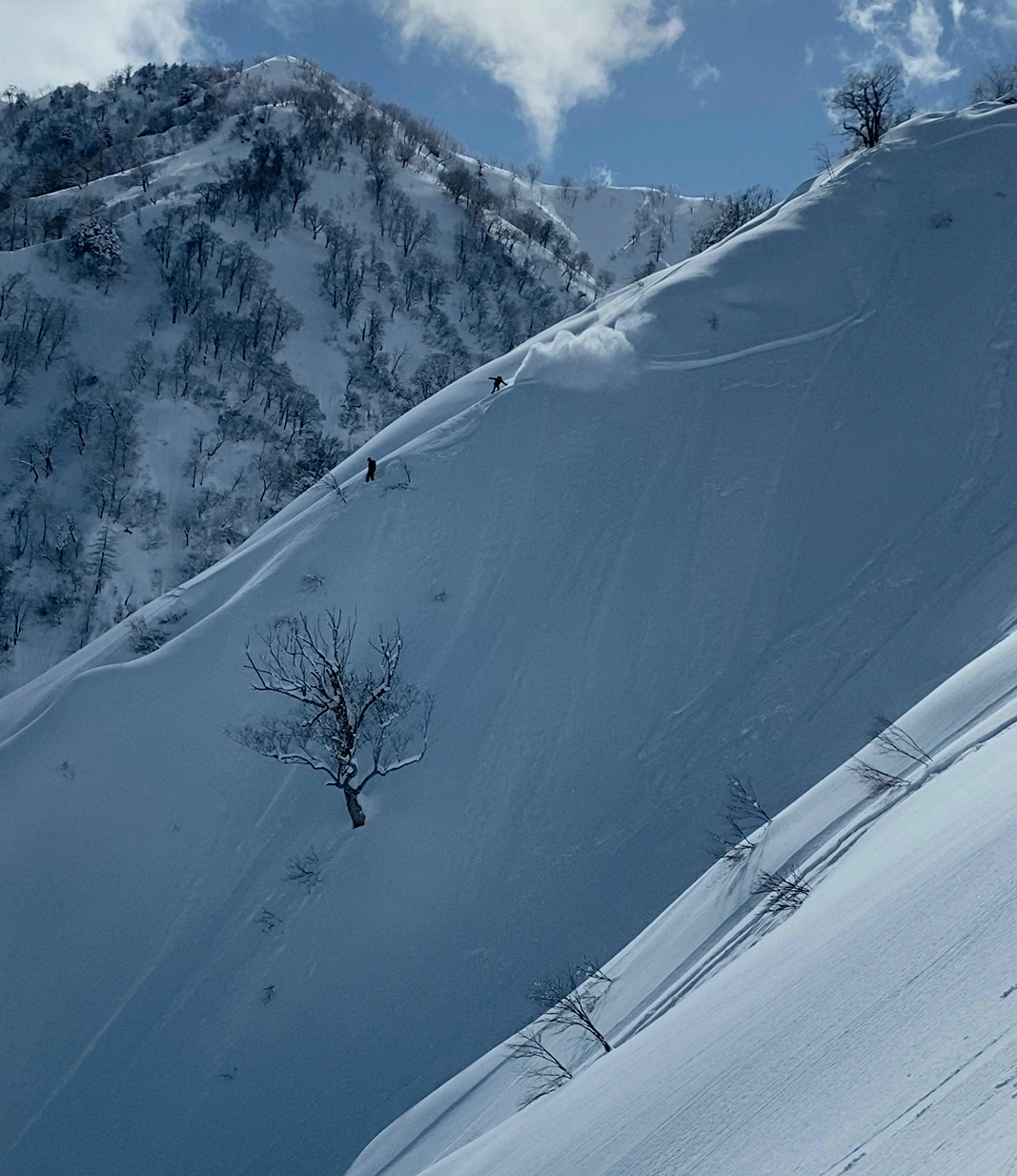
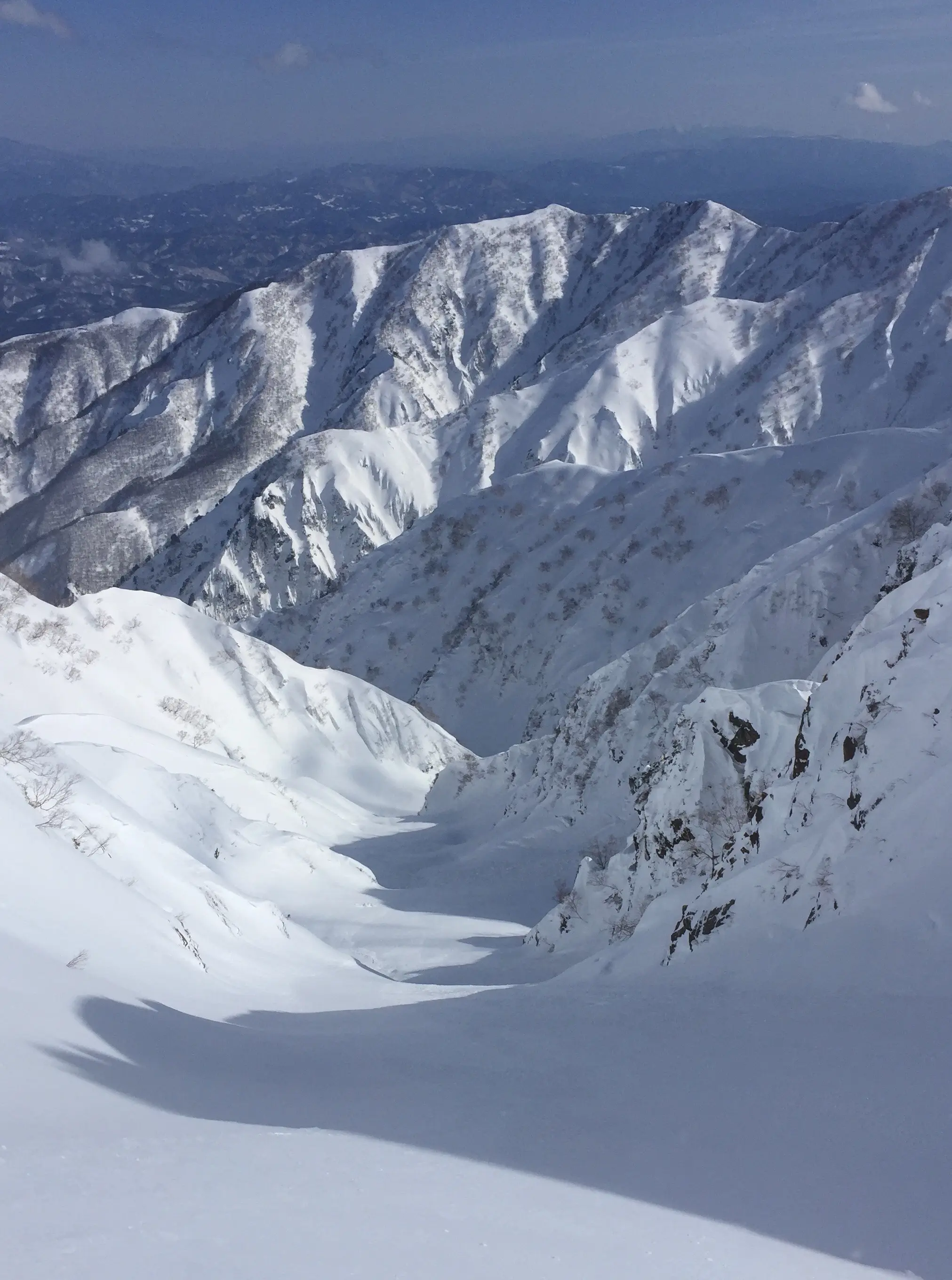
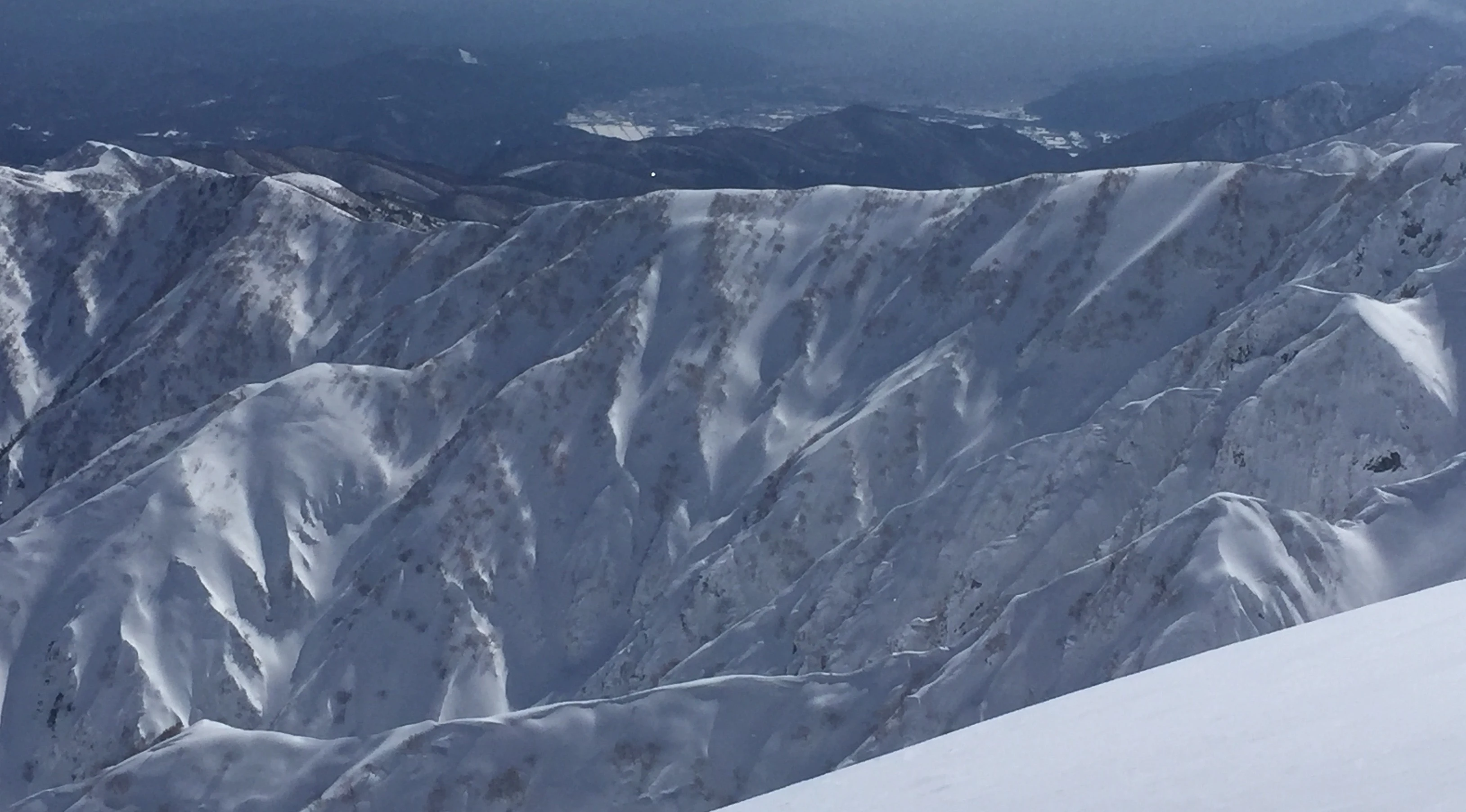
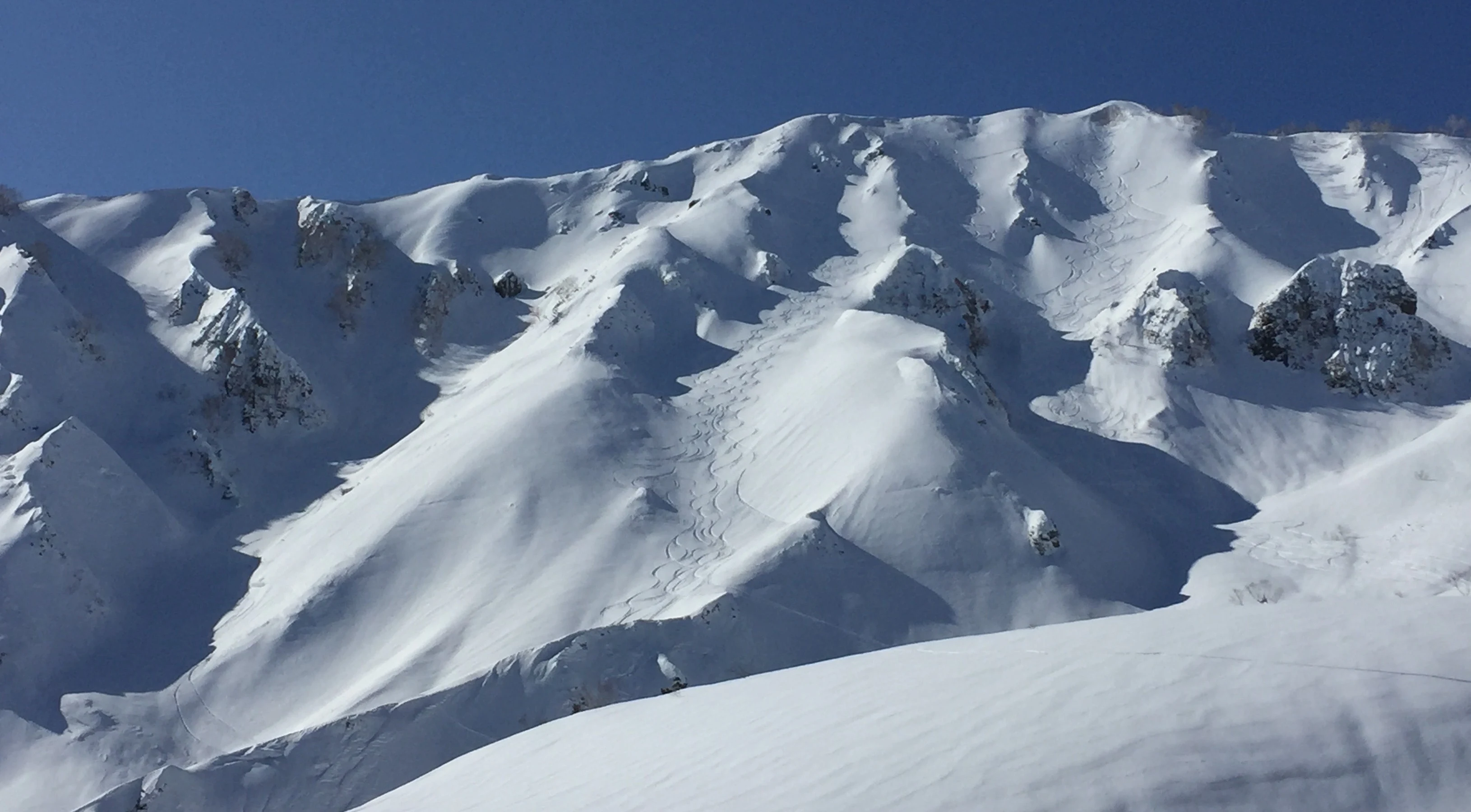
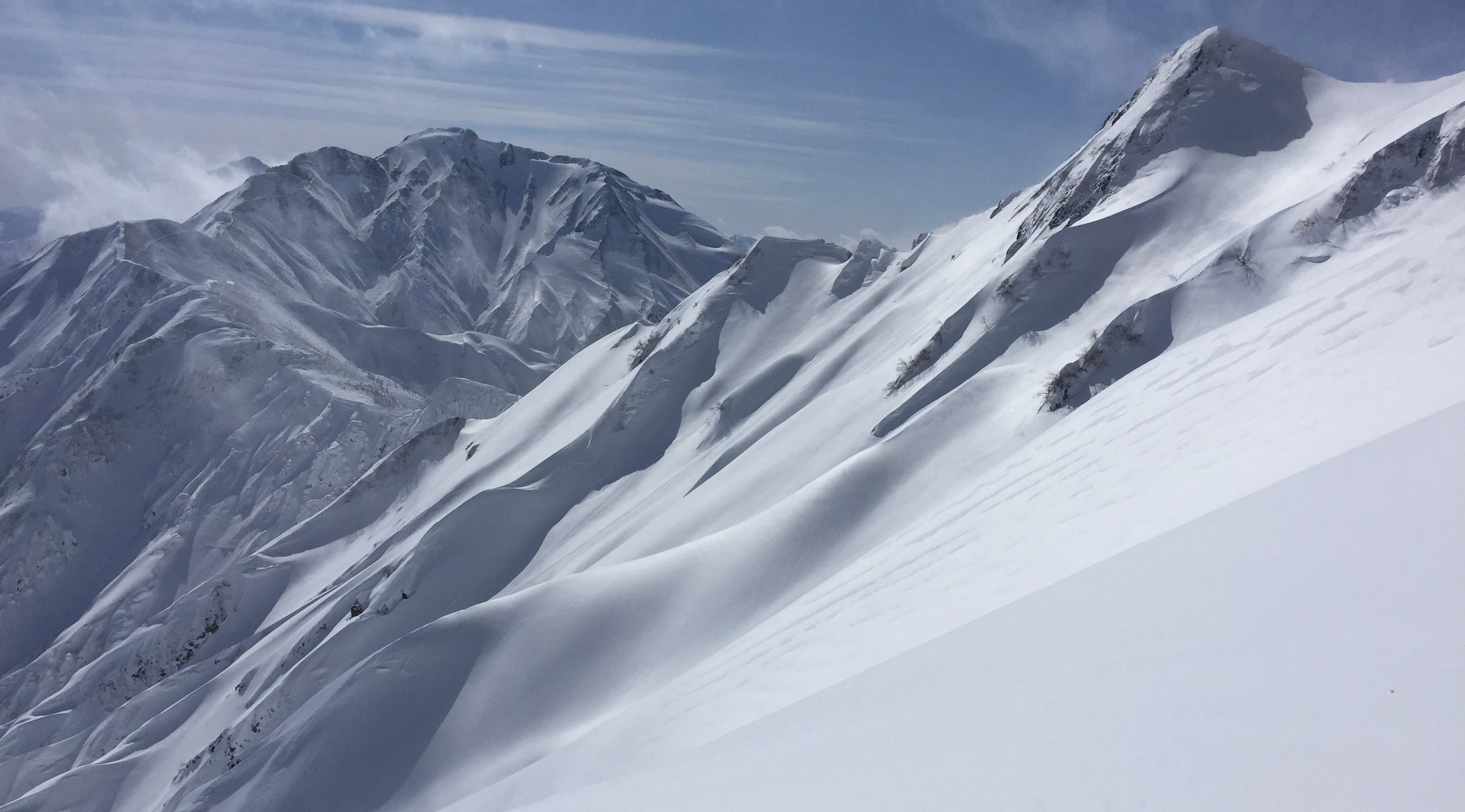
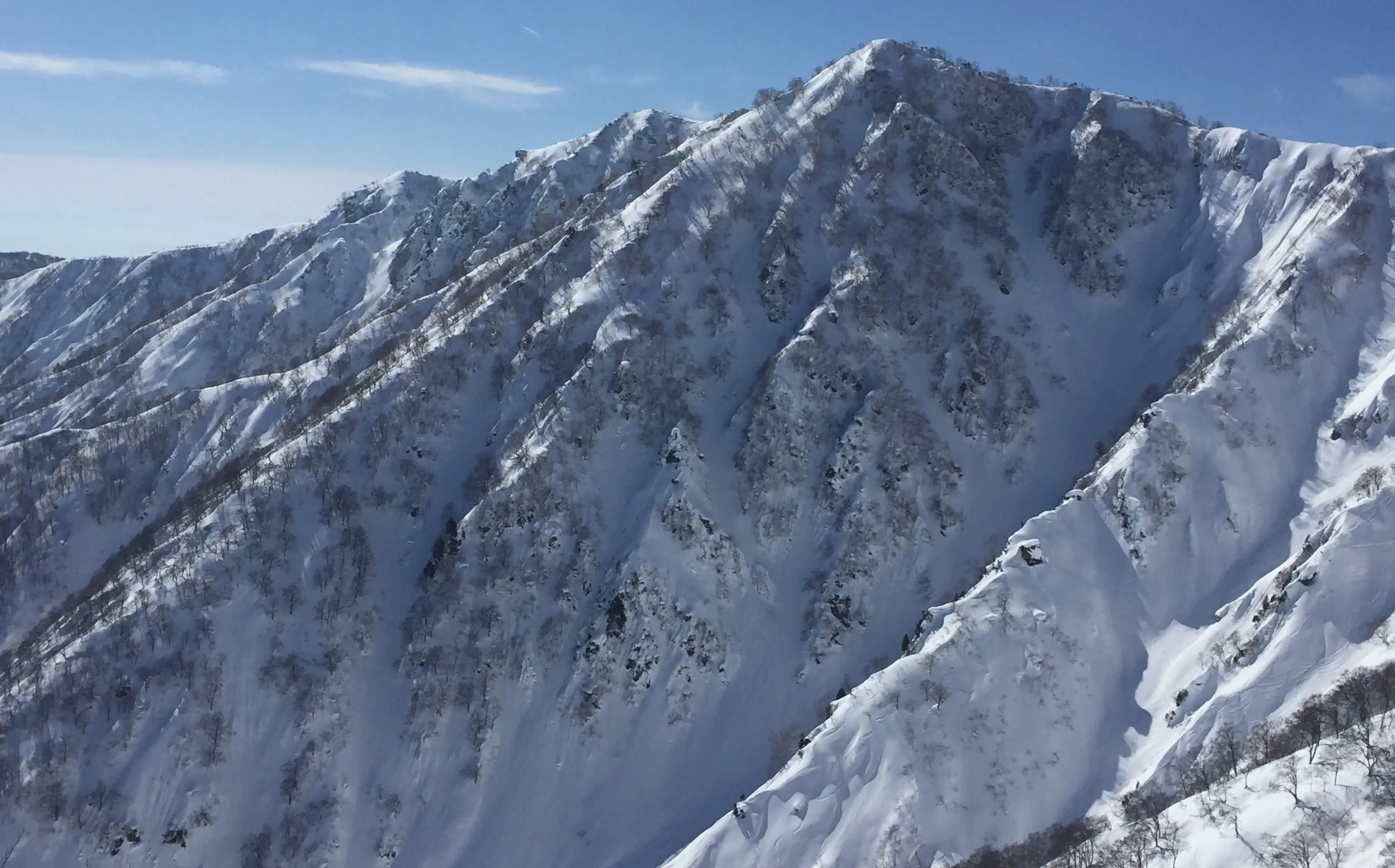
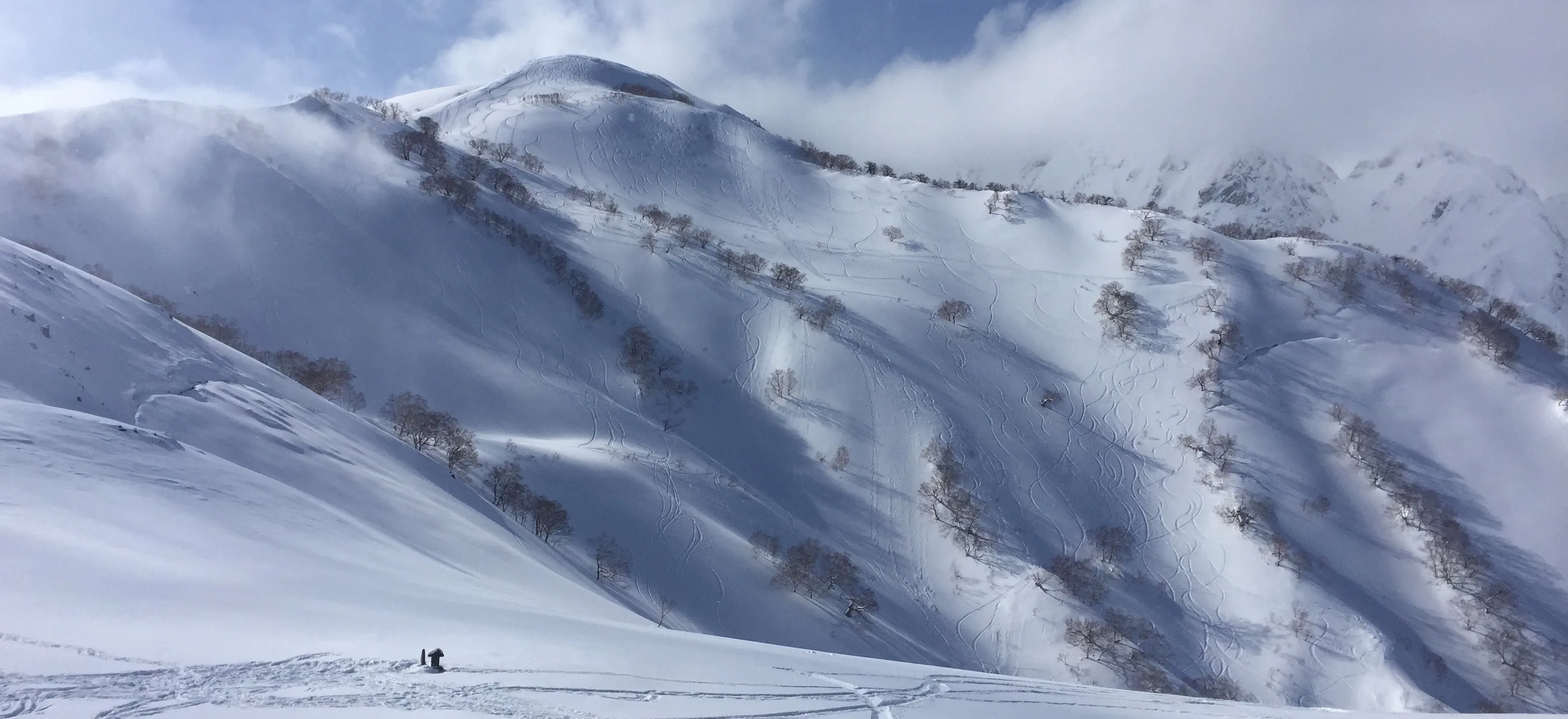
The Japanese Alps are strikingly unique compared to many of the world’s classic mountain ranges. Formed from highly erosive rock, they are shaped by extreme seasonal weather, pummeled by heavy rains during the Eastern Asian Monsoon with the occasional typhoons in the summer, and sculpted by powerful avalanche cycles throughout winter and spring. These natural forces have carved a landscape defined by “truncated spurs,” a unique geomorphology marked by endlessly branching and sharply divided ridgelines falling steeply away to deep gullies.
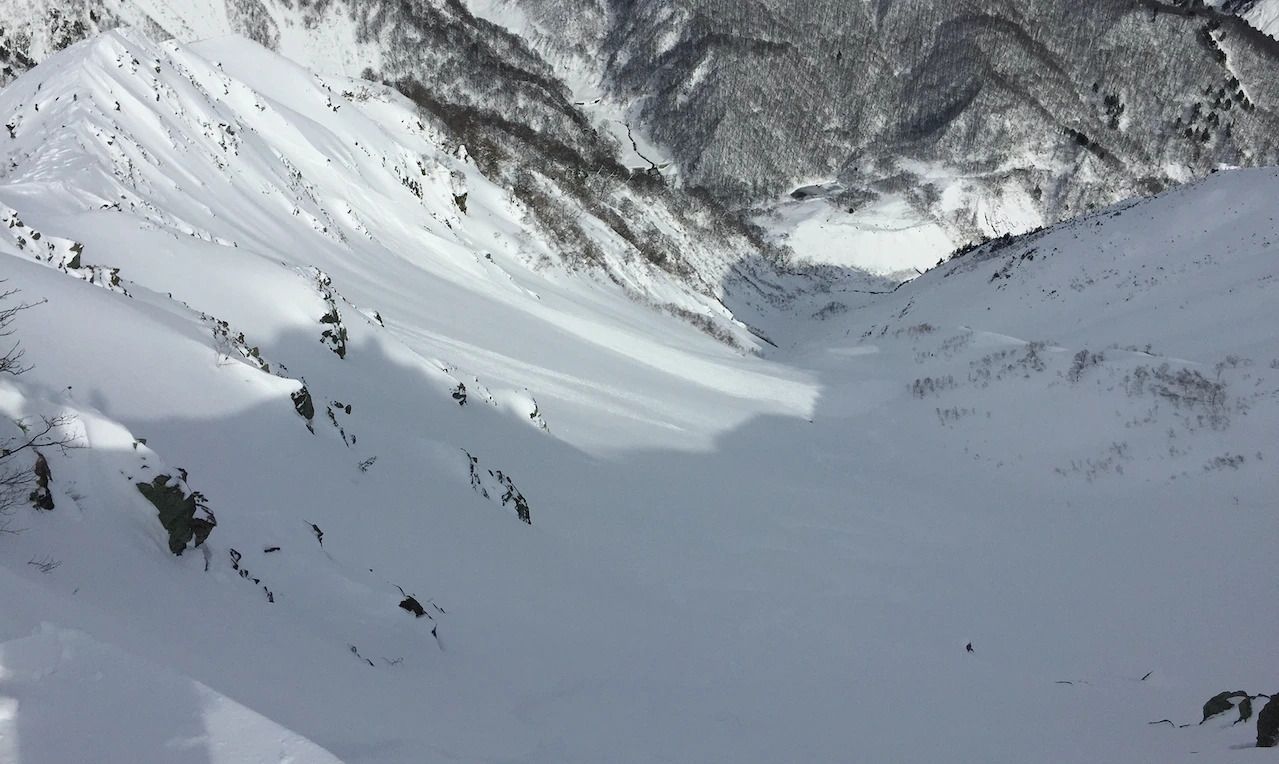
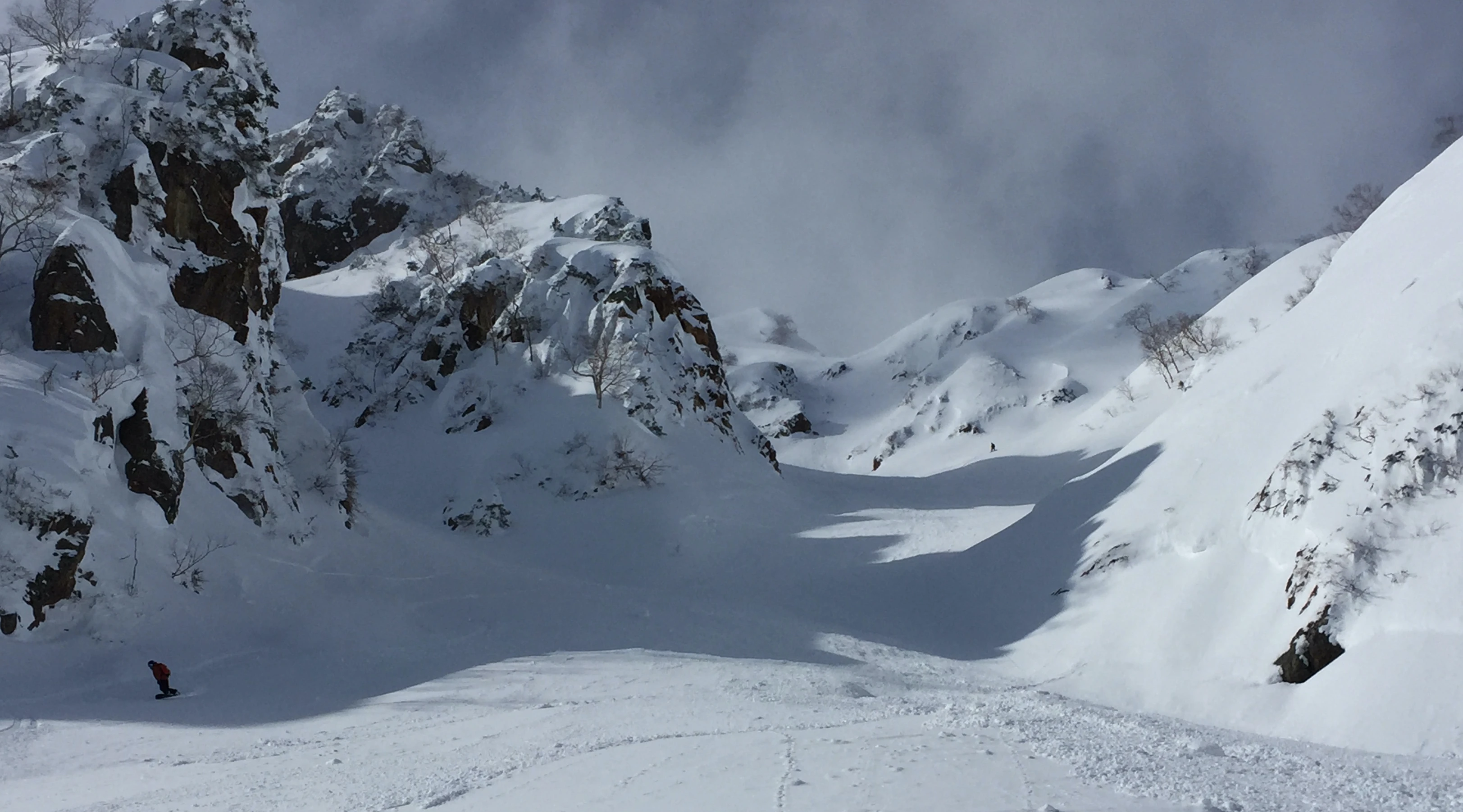
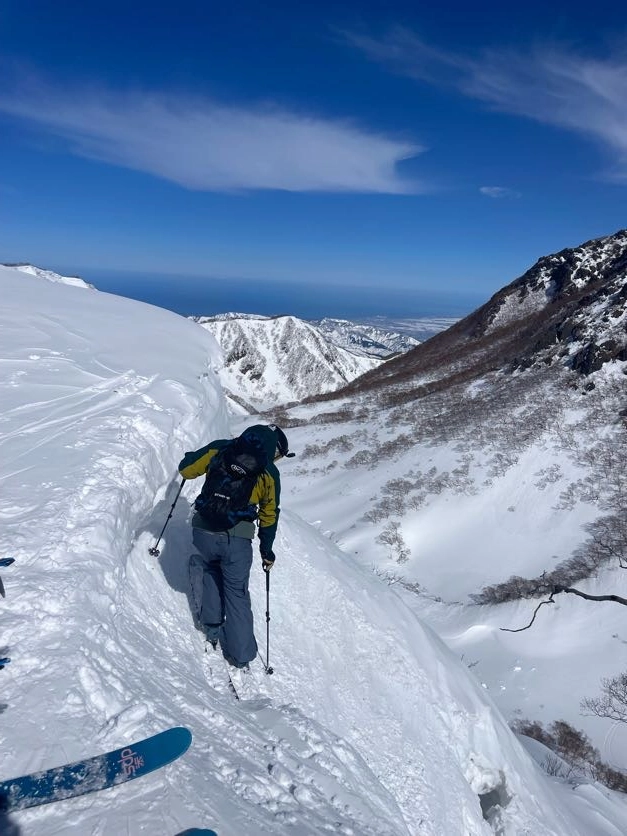
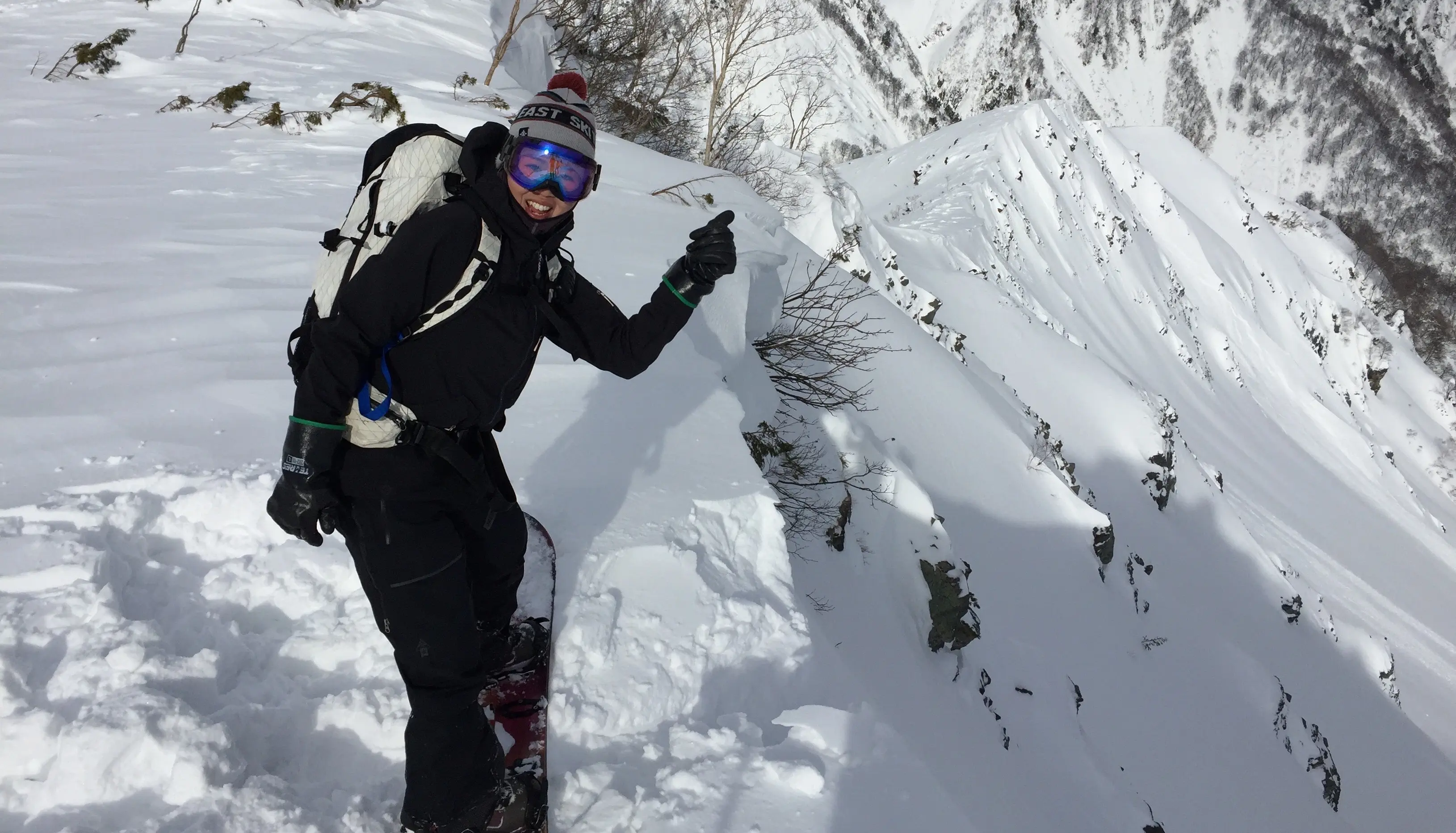
This complex terrain creates an engaging and distinctive environment for skiing, route finding, managing sluff and avalanche hazards. Broad, planar slopes are rare here, steep, intricate features dominate the landscape. For the skilled powder skier or snowboarder, it’s a natural playground of spines, gullies, chutes, and couloirs, with a staggering number of different lines.
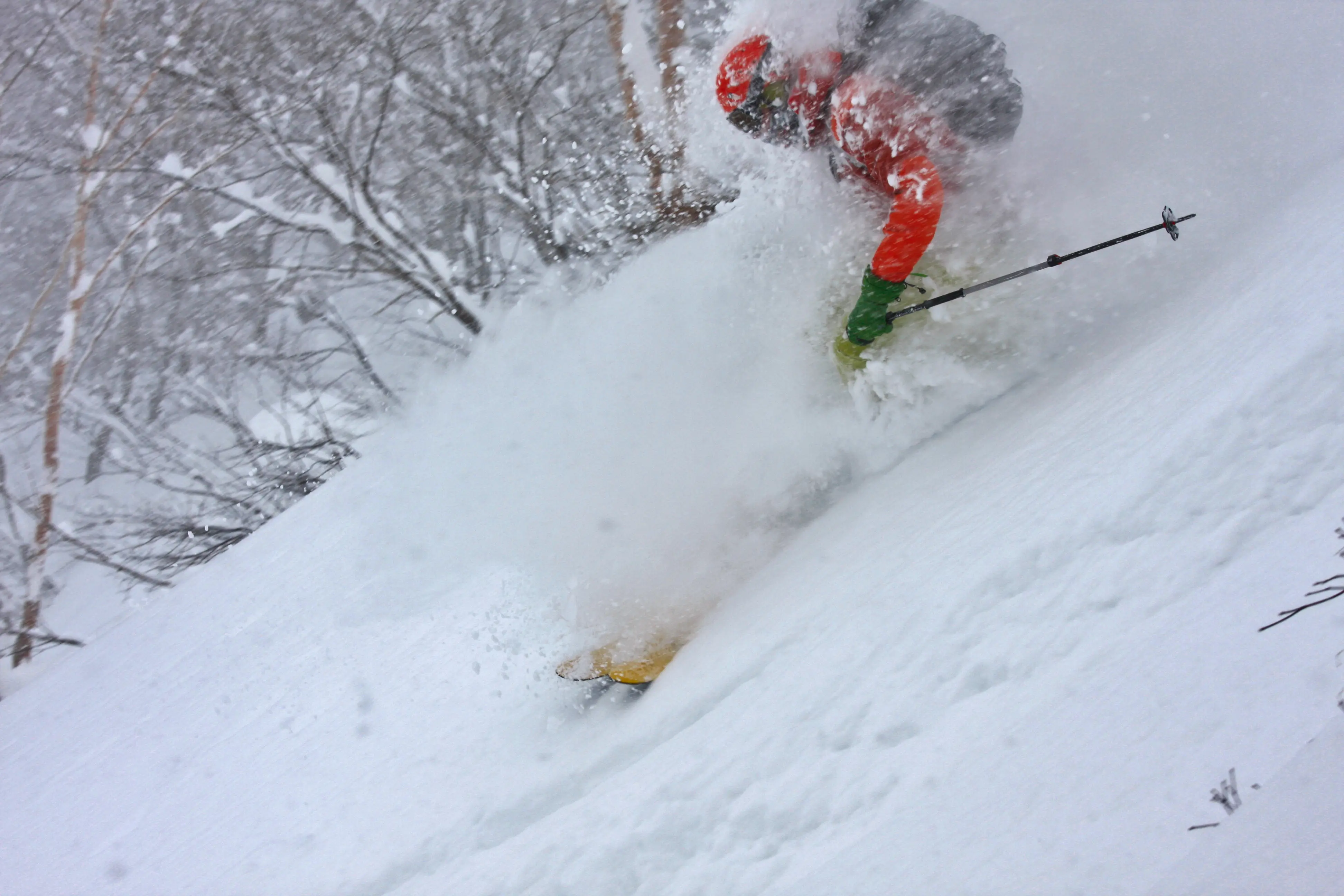
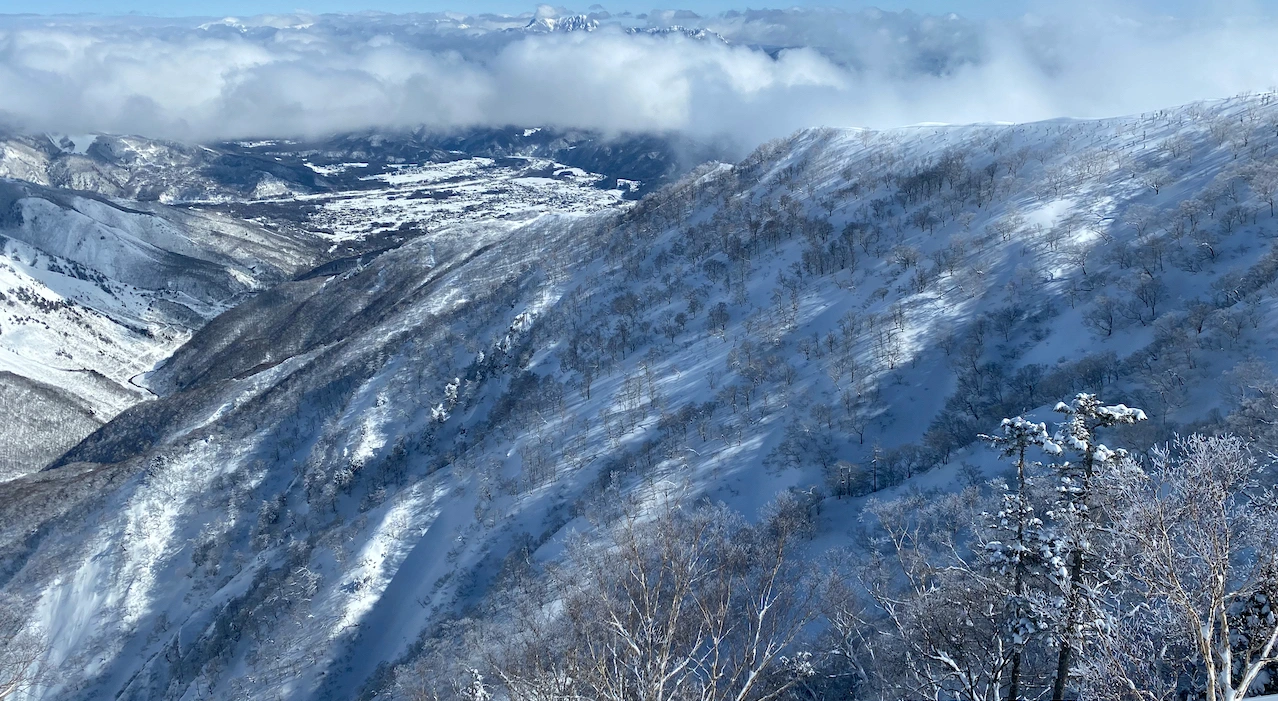
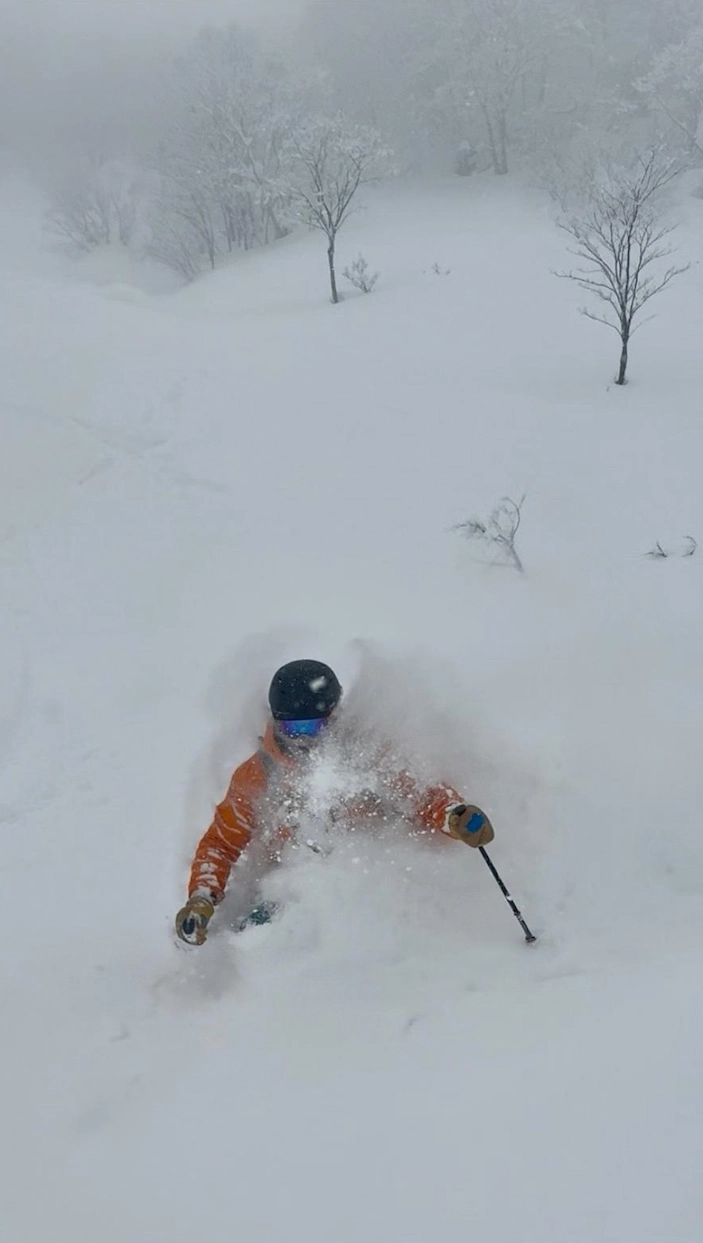
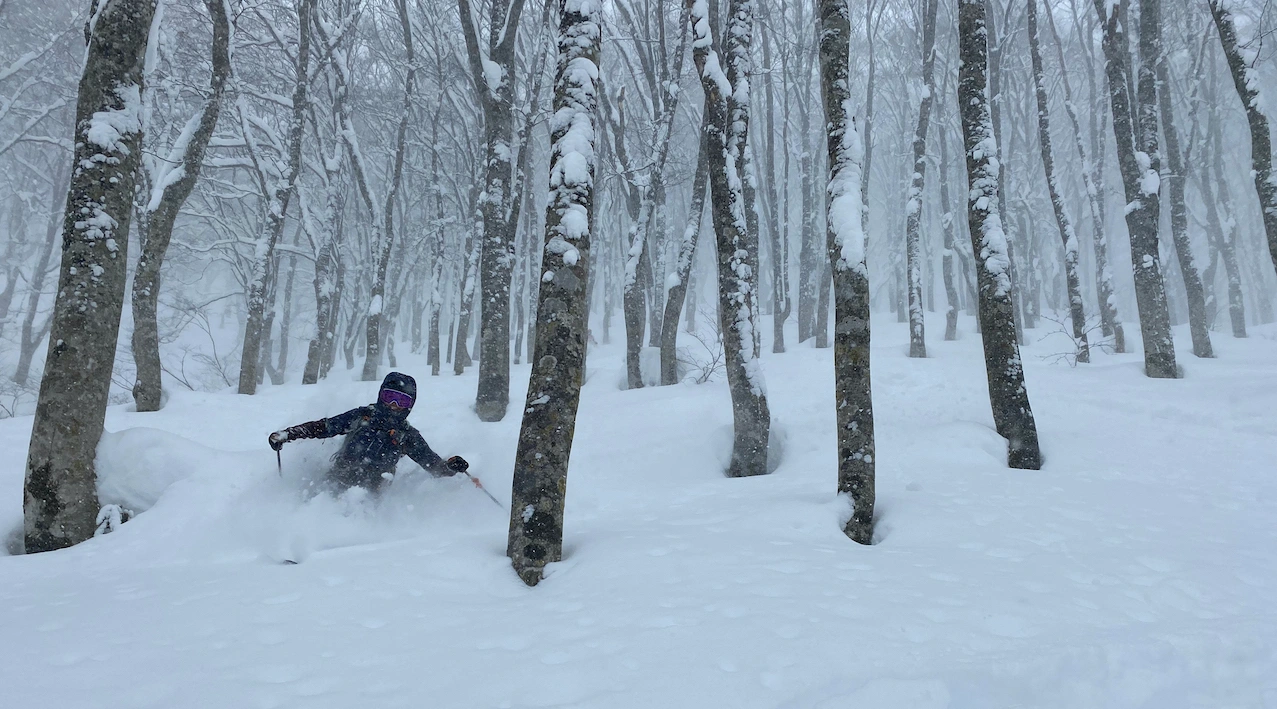
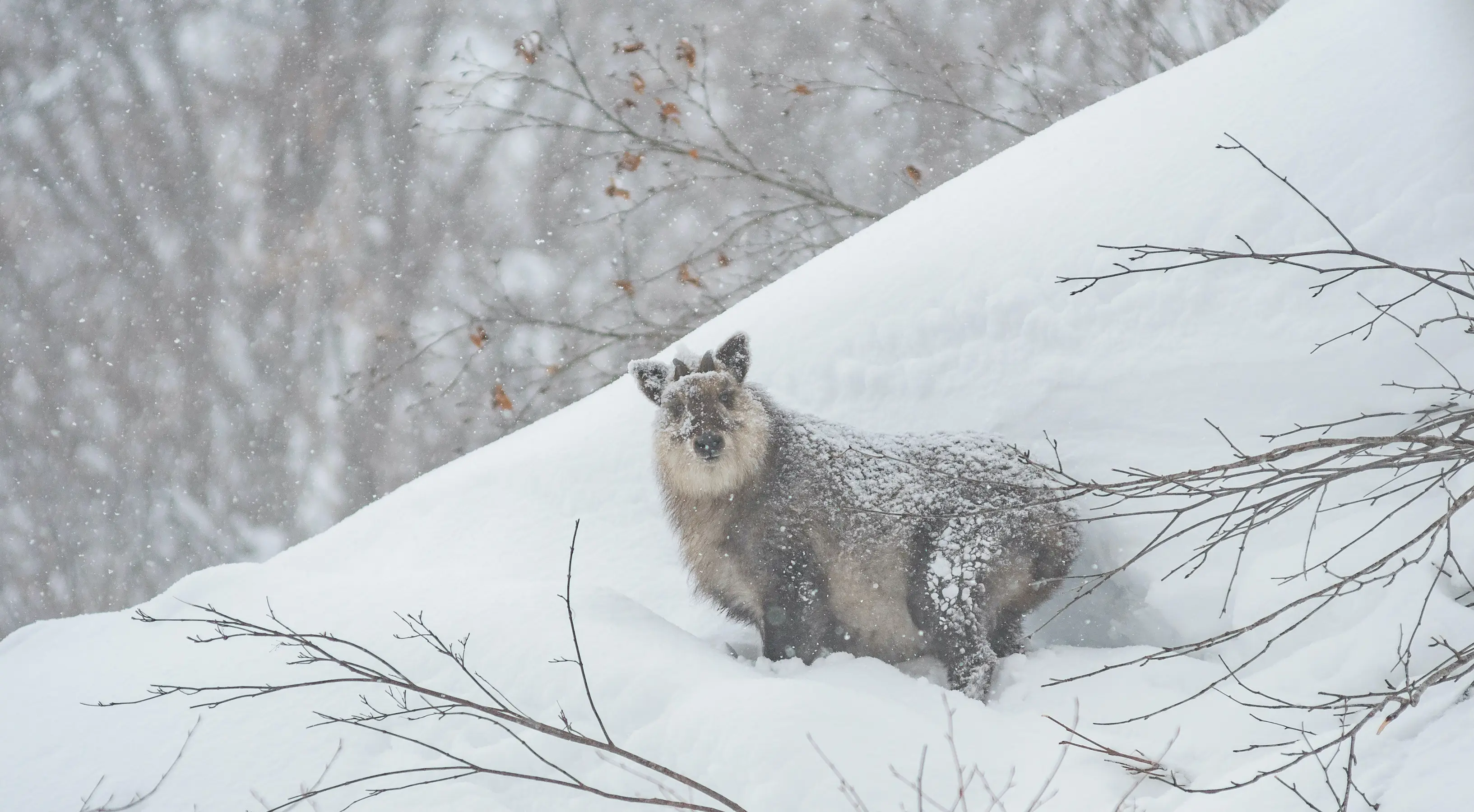
When the skies clear after a storm, opportunities open up to summit peaks, ski steep alpine faces, and descend long, rock-walled couloirs. And if the snow keeps falling, as it often does, there’s incredible tree skiing through the deciduous jungle of Japanese birch, strangler vines, and even the occasional troop of monkeys (yes, really). These birch forests offer wide sight lines and deep, untouched fluffy powder beneath a leafless winter canopy.
Japan's Powder Phenomena
We ski through a deciduous jungle blanketed by an astonishing 11 meters (36 feet) of snow each winter, most of it falling during the intense three-month window of December through February. During the 2024–25 season, Happo-one ski resort reported a total snowfall of 12.48 meters (41 feet), with a maximum base depth of 6.5 meters (21.3 feet) recorded on February 24th.
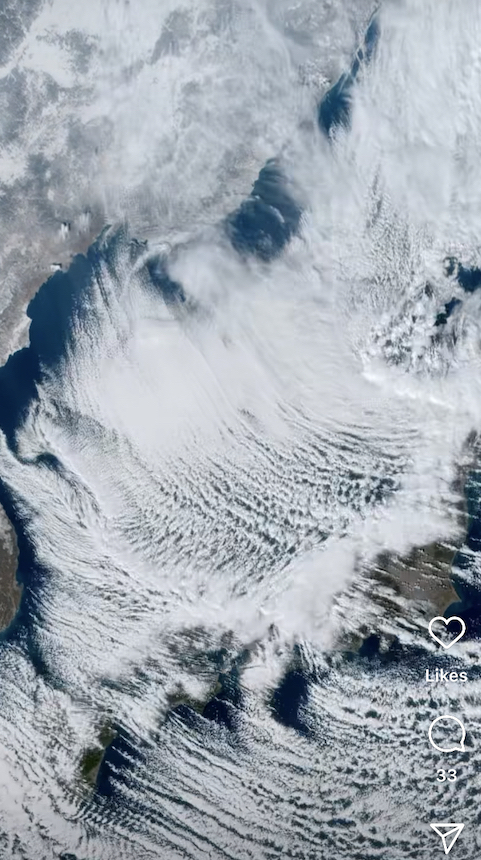
This legendary snowfall is the result of one of the most powerful lake effect, or in this case, ocean effect, systems in the world. During winter, two major global pressure systems dominate the region: the Siberian High over the Eurasian continent and the Aleutian Low over the North Pacific. In a constant attempt to equalize, frigid air masses from Siberia surge toward the low pressure in the North Pacific, crossing the relatively warm Sea of Japan.
As this supercooled air travels over the ocean, it causes rapid evaporation from the warmer sea surface, creating moisture-laden clouds in a phenomenon commonly referred to as the lake effect, or ocean effect. These clouds are then compressed and forced upward by the dramatic rise of the Japanese Alps—from sea level to 3,000 meters (9,800 feet) in just 40 kilometres (24 miles). This orographic lift, combined with the intense moisture and temperature gradient, results in the deep, consistent powder Japan is so famous for.
This unique meteorological setup explains the consistently heavy snowfall and the renowned cold powder skiing conditions across much of Japan, particularly during the peak winter months.
Japanese Culture: Respect, Tradition & Diligence
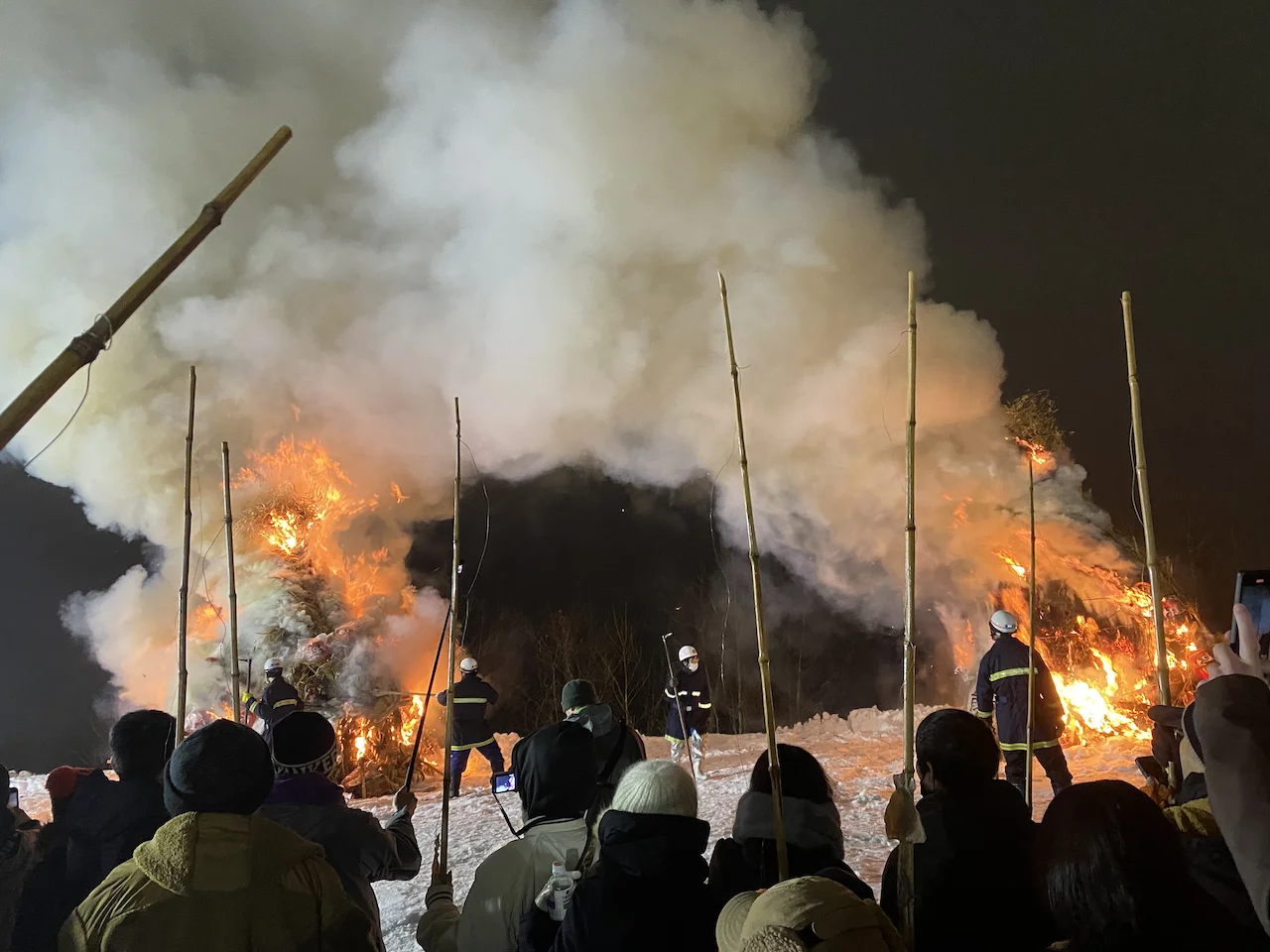
While most of our time in Japan is spent chasing powder, Japan’s rich and unique culture is everywhere. It’s a seamless blend of modern innovation and deep-rooted tradition, high speed trains networks, striking efficiency to traditional onsens and graceful gardens diligently protected from the winter snow.
Japan is refreshing in many ways that contrast many western societies. It’s a conformist society where harmony, mutual respect and group consensus are valued. Collectiveness, diligence and hard work are highly valued.
While the Western ski market has become a vital source of income for these rural communities, and I believe the majority of our impact is positive. I’m acutely aware of the impact we, as Western visitors, can have on mountain towns in Japan, particularly through our sometimes brash, disordered, and rule-breaking individualism, which becomes especially noticeable in our pursuit of powder.
I deeply wish that our presence could better reflect the dignity and respect that these towns and their people embody.
I will leave the endless cultural delights for you to experience on this trip.
Your Accommodations In Hakuba & Mt. Myoko
Private Chalet - Hakuba
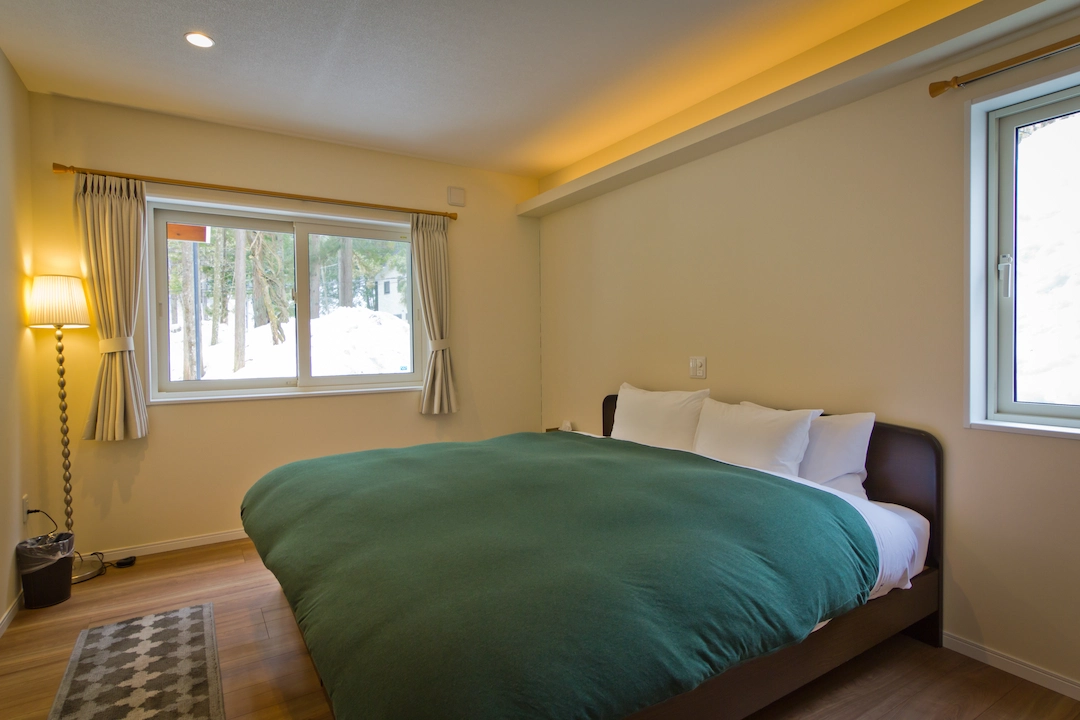
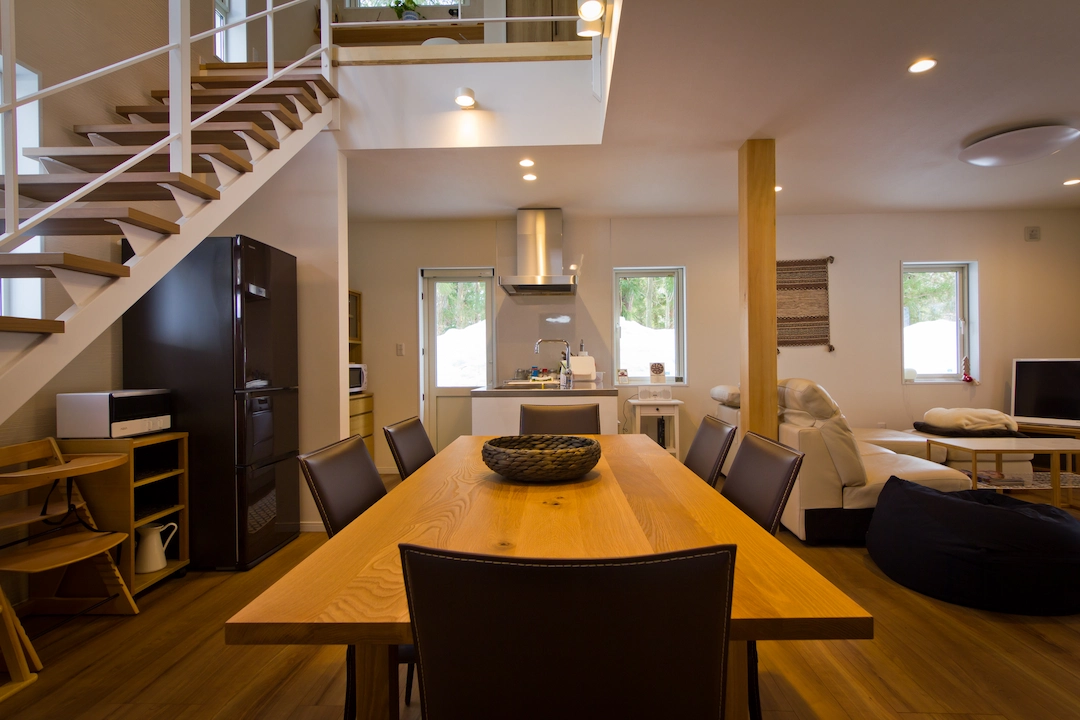
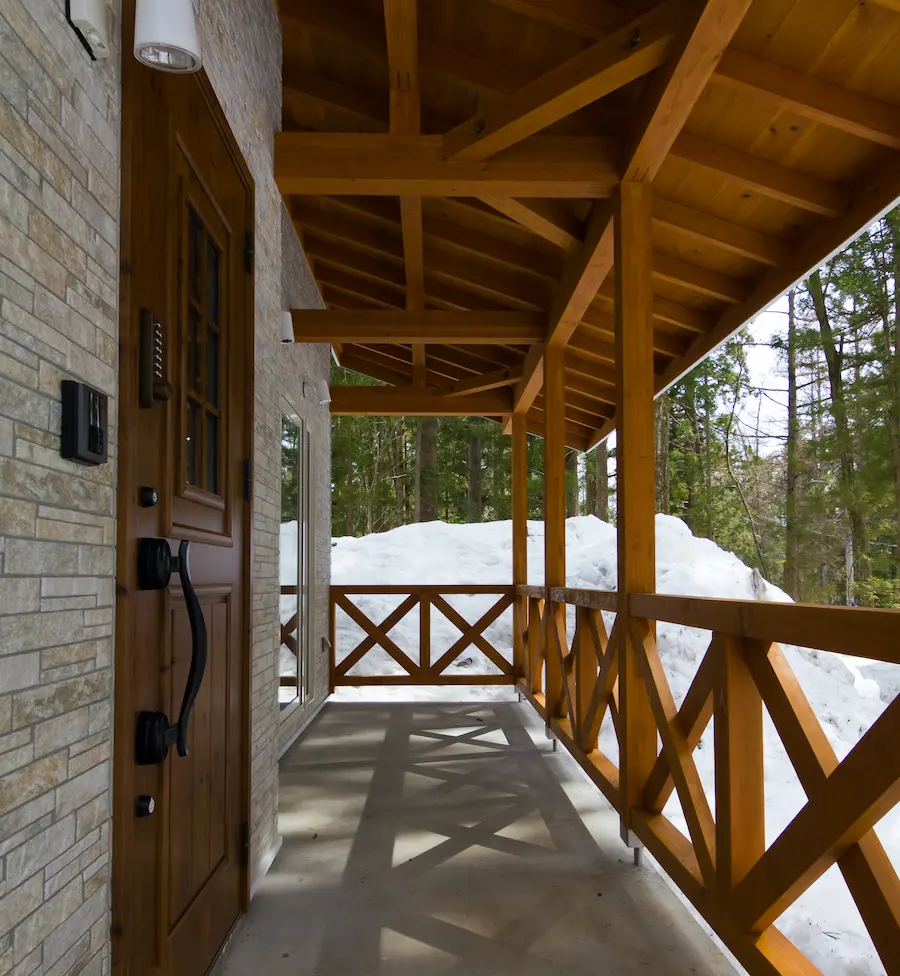
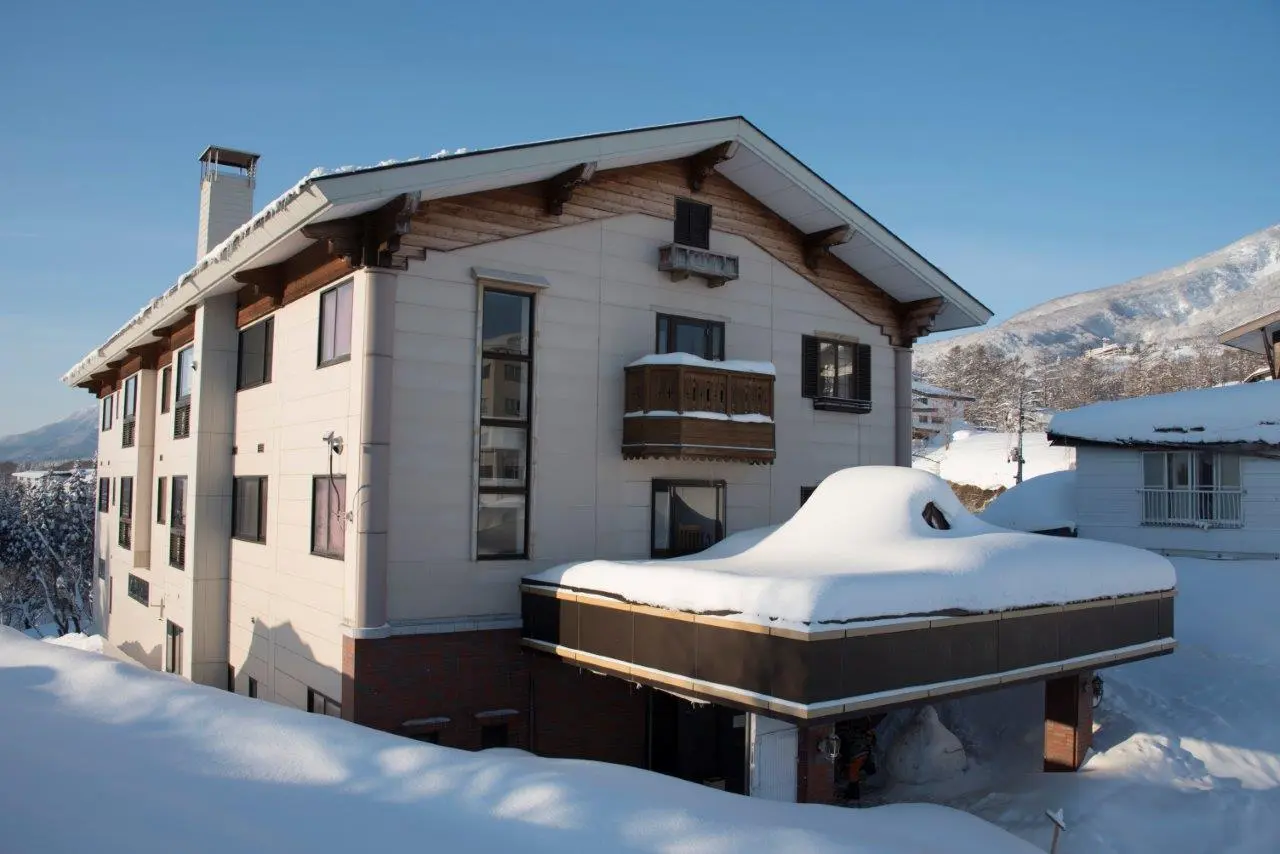
In Hakuba, you'll stay in a beautiful private chalet nestled in the quiet, forested neighborhood of Wandao. The chalet features three double-occupancy rooms, suitable for couples or two singles, and is equipped with a modern kitchen, two full bathrooms, underfloor heating, and a cozy lounge to unwind in. But don’t get too comfortable—I've handpicked some of Hakuba’s finest and most unique restaurants, with reservations made well in advance to ensure an unforgettable dining experience.
%20copy.webp)
Private Chalet - Hakuba
In Hakuba, you'll stay in a beautiful private chalet nestled in the quiet, forested neighborhood of Wandao. The chalet features three double-occupancy rooms, suitable for couples or two singles, and is equipped with a modern kitchen, two full bathrooms, underfloor heating, and a cozy lounge to unwind in. But don’t get too comfortable—I've handpicked some of Hakuba’s finest and most unique restaurants, with reservations made well in advance to ensure an unforgettable dining experience.
Lodge with Onsen - Mt. Myoko
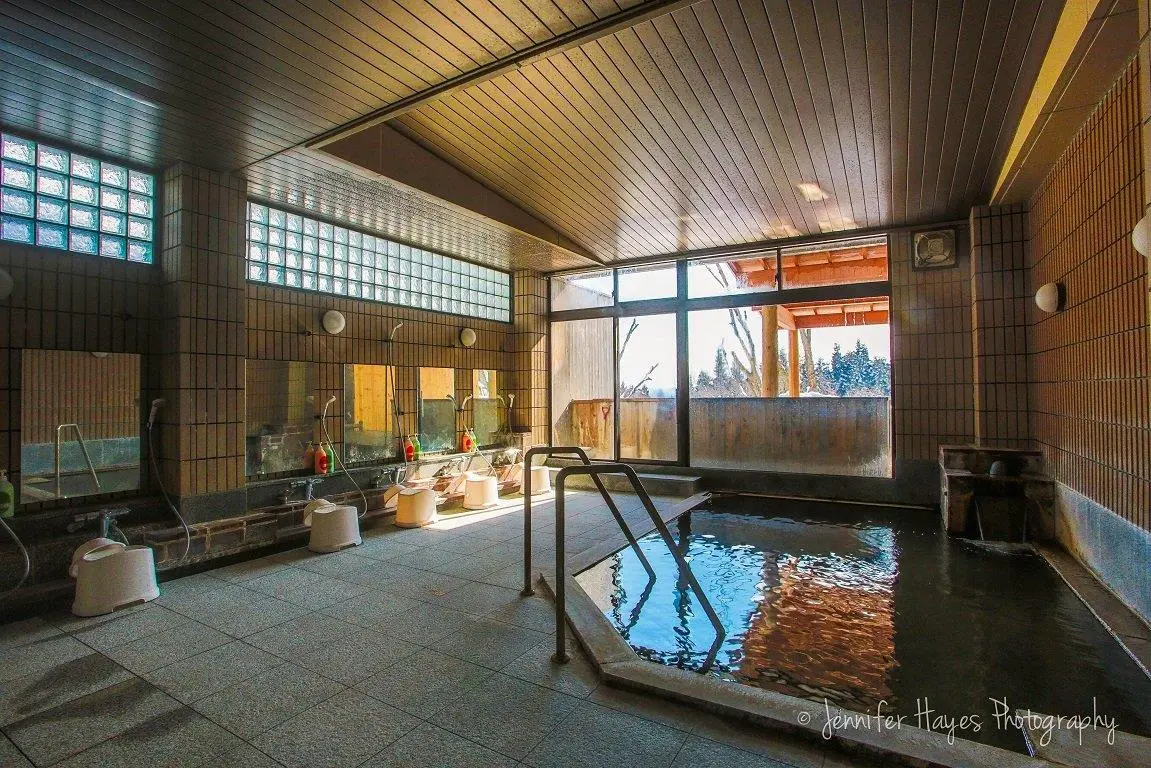
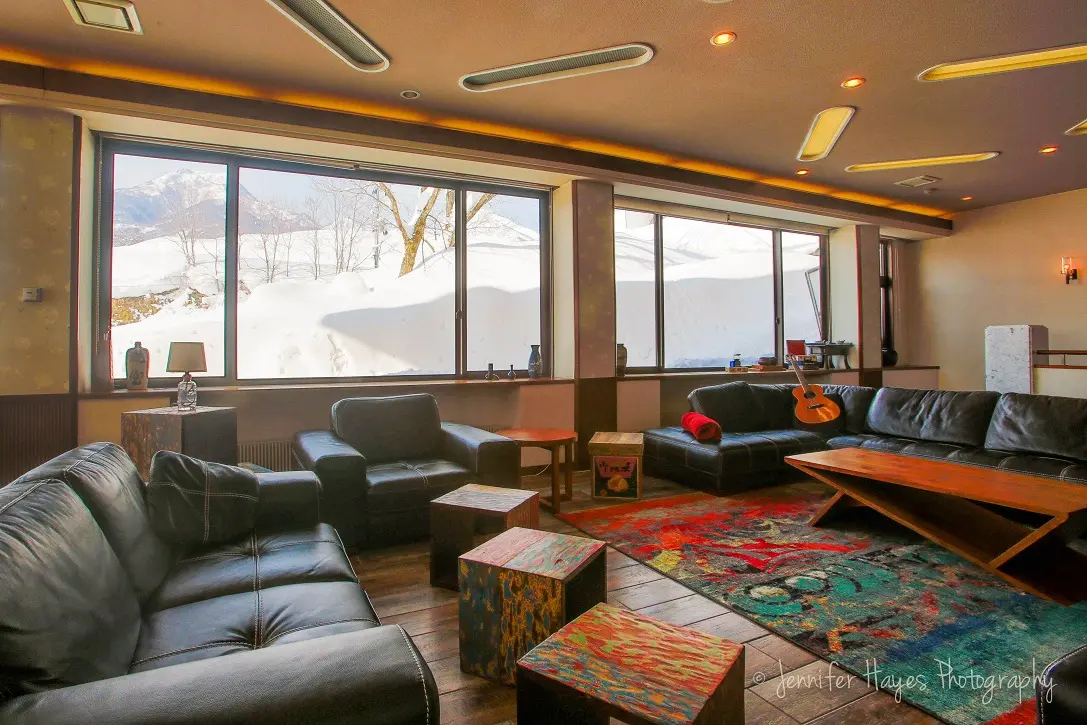
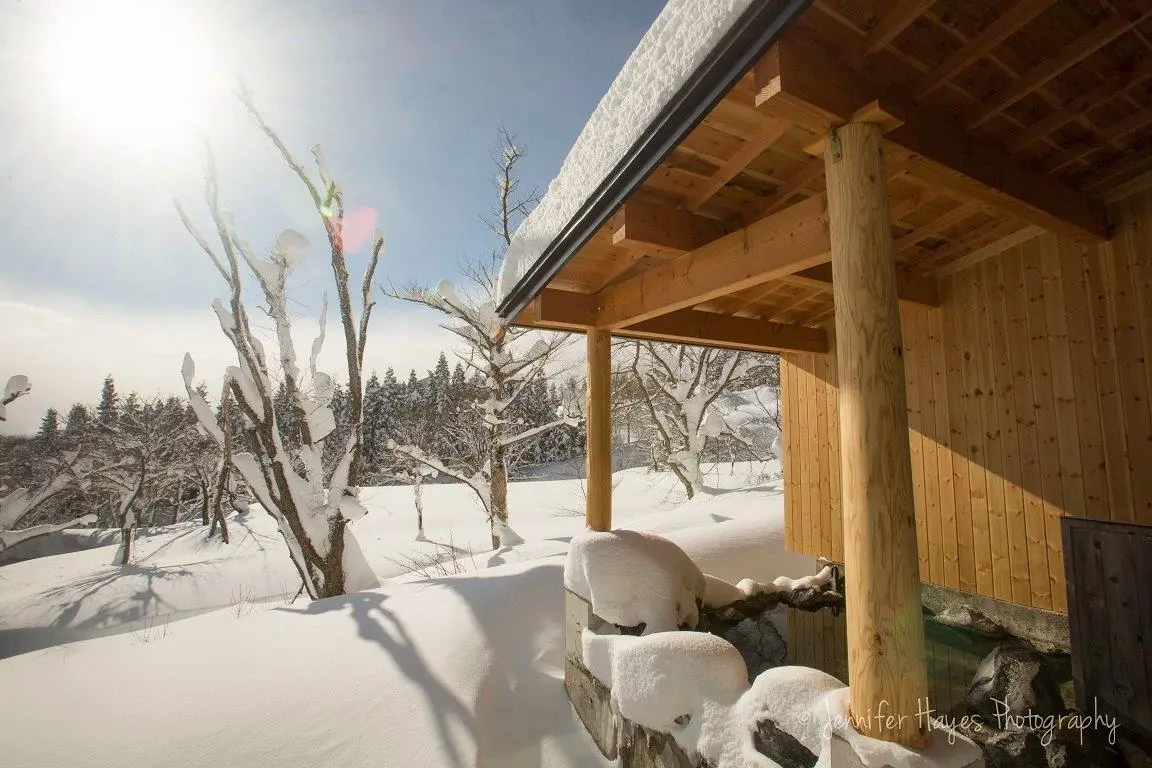
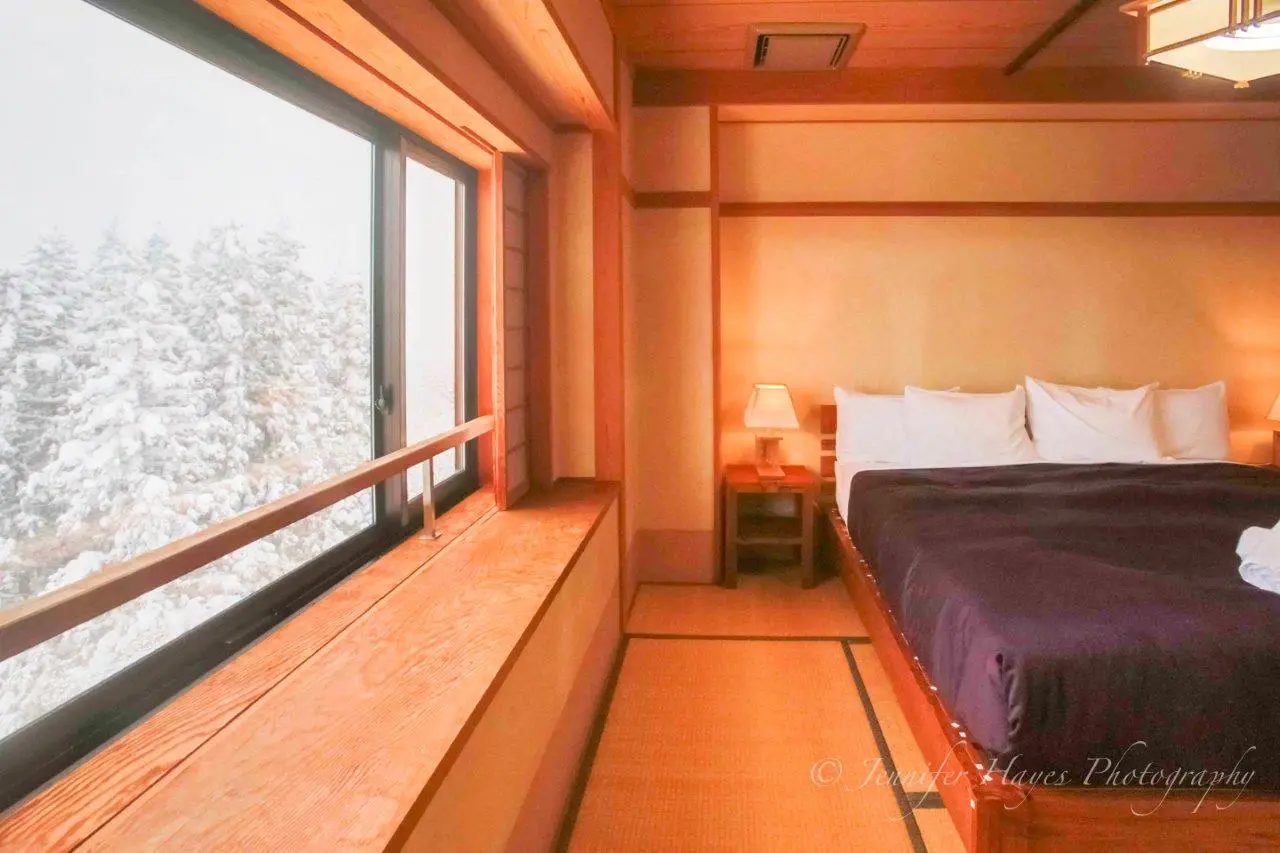
In Mt Myoko you’ll stay in a comfortable lodge with private double-occupancy rooms, suitable for couples or two singles, with an ensuite bathroom & shower. The lodge features a comfortable lounge and bar area that’s perfect for after-skiing socializing. But the real standout is the in-house onsen, which flows with iron-rich hot spring water naturally heated by the volcanic rocks beneath Mt. Myoko. It’s the convenience of accessible soaking after a big day of skiing.
A healthy breakfast is included, and there’s a barista on hand to serve up quality coffee each morning. In the evenings, a short (and often snowy) walk takes you to some quant and traditional restaurants. That said, a trend tends to emerge, “We walk in the backcountry and drive in the front country” when the snow’s that deep, sometimes it’s the only way.

Your Guide
Will Mackaness
%20copy.webp)
ACMG Ski Guide & Founder of Backcountry Alchemy
Will is an ACMG-certified ski guide and has been guiding in Japan, particularly in Hakuba and Mt. Myoko, since 2018. I genuinely love skiing in Japan, and that passion fuels everything I do on this trip. I really enjoy having so much terrain and line choice, and weaving these together creatively each day, whether it’s lift-assisted storm skiing in the forest or heading into the high alpine for long descents to the valley bottom. My guiding style is client-focused, flexible, and informed by years of local experience. I prioritize safety, excellent snow quality, interesting skiing and riding, adventure and exploration, and just having fun. See the About page for a full bio and guiding background.
Will Mackaness
ACMG Ski Guide & Founder of Backcountry Alchemy
Will is an ACMG-certified ski guide and has been guiding in Japan, particularly in Hakuba and Mt. Myoko, since 2018. I genuinely love skiing in Japan, and that passion fuels everything I do on this trip. I really enjoy having so much terrain and line choice, and weaving these together creatively each day, whether it’s lift-assisted storm skiing in the forest or heading into the high alpine for long descents to the valley bottom. My guiding style is client-focused, flexible, and informed by years of local experience. I prioritize safety, excellent snow quality, interesting skiing and riding, adventure and exploration, and just having fun. See the About page for a full bio and guiding background.
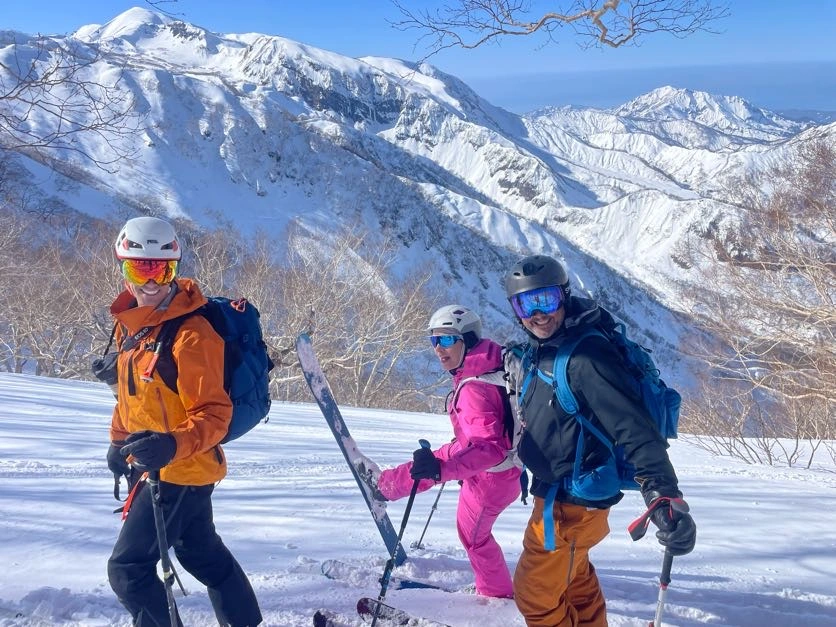
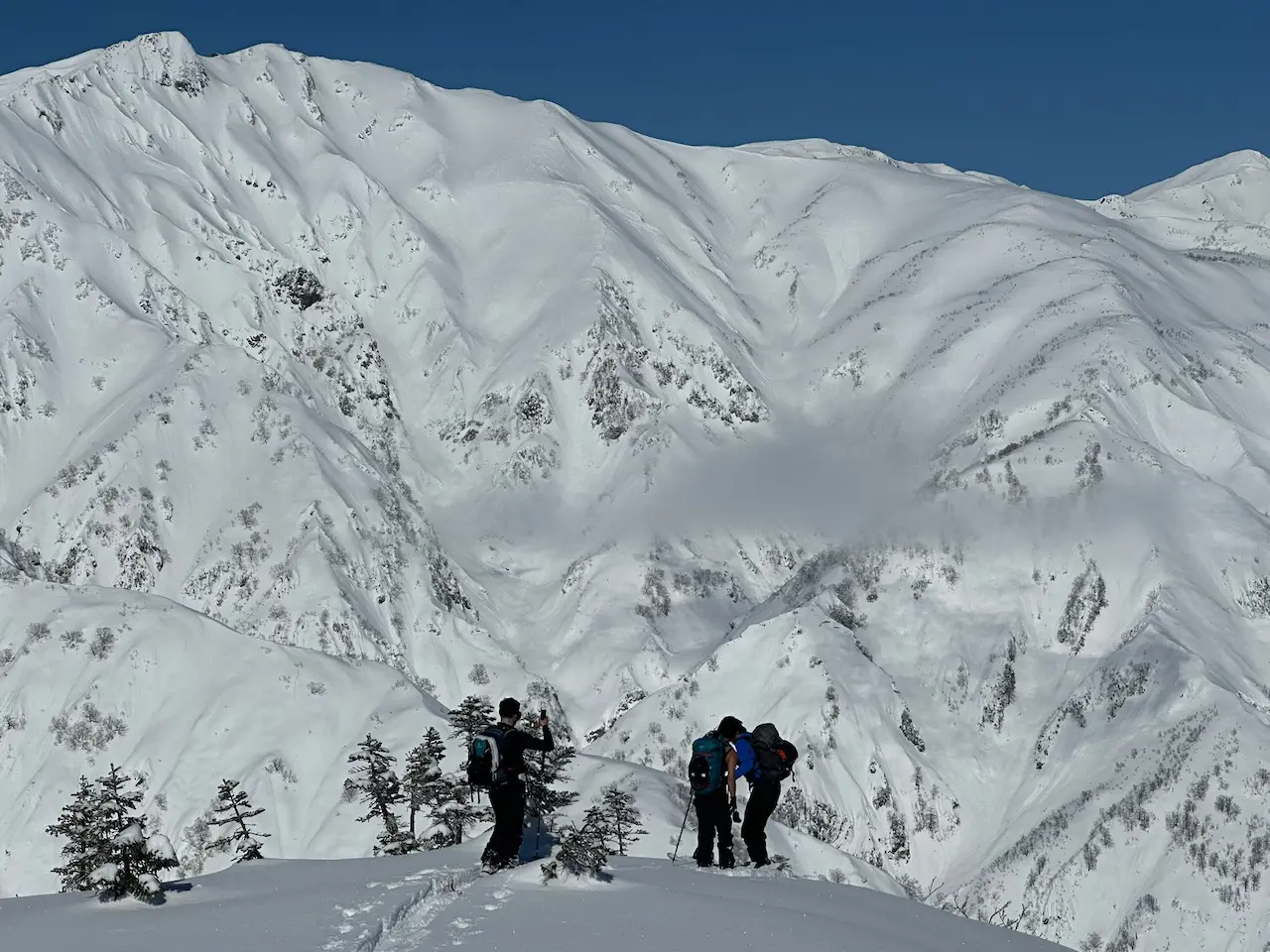
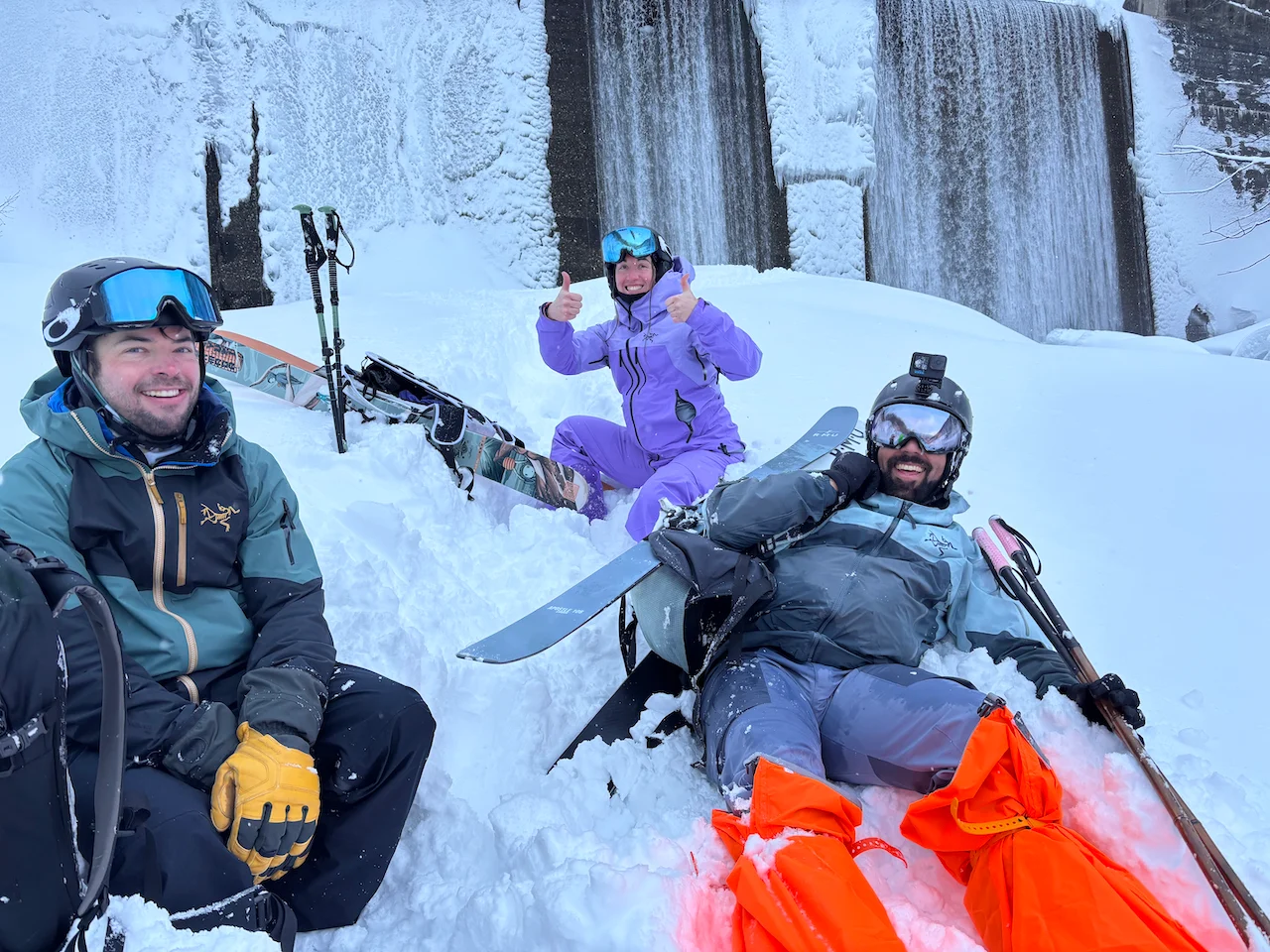
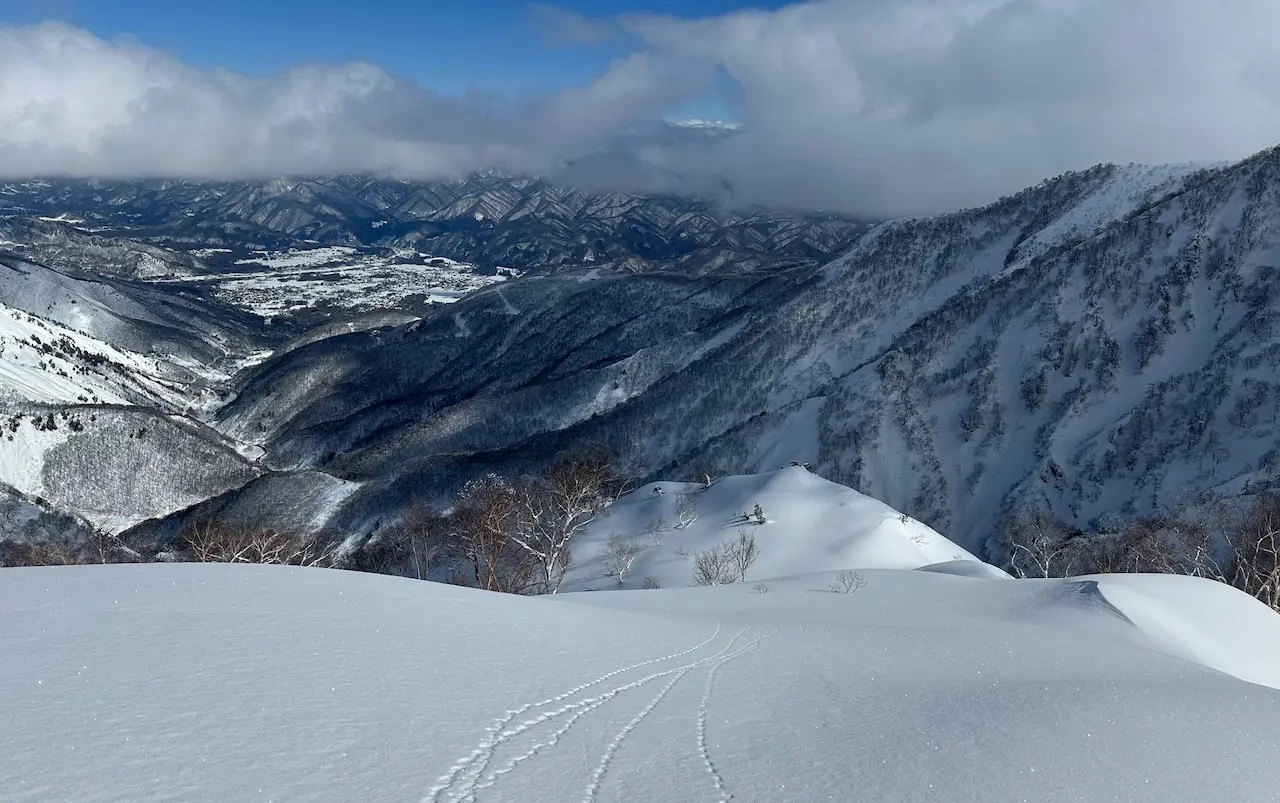
Photo Gallery: Highlights from Past Trips
.webp)
%20copy%20(1).webp)
.webp)


Client Testimonials & Trip Reviews
Japan Ski Touring – Guided Backcountry Trips in Hakuba & Myoko
Frequently Asked Questions
How to decide when to go?
This is always a tough question. Like any ski trip, there’s an element of uncertainty when it comes to conditions—it’s often a matter of timing and a bit of luck as to which dates deliver the deepest snow or best weather. That said, I’ve scheduled trip dates to align with the most consistent conditions in both Hakuba and Mt Myoko, factoring in snowpack depth, snowfall trends, and stable cold temperatures.
Think of Japan’s winter season as a continuum:
Early January
- Coldest part of the season
- Lightest, driest powder (perfect for deep tree skiing)
- Frequent storms, fewer bluebird days
- Shallower snowpack — alpine terrain less accessible
- Focus on tree lines and storm riding
Mid-late February
- Deepest snowpack — more terrain "filled in"
- More bluebird days
- Still plenty of fresh snow
- Ideal for alpine lines and longer descents
- Greater access to steep terrain and big objectives
Of course, these are just patterns not rules. I’ve skied 100 cm of ultra-light powder in early February and tackled big alpine lines in January. Conditions can vary, but both ends of the spectrum offer something special.
One more note: Japan’s alpine terrain is often overlooked when planning a trip, but it’s incredibly underrated. Some of my most memorable descents have been down steep couloirs and faces in the alpine—it’s terrain that rivals anywhere for those who are ready for it.
Who is this trip for?
This trip is designed for advanced to expert skiers and snowboarders with backcountry experience. You should be confident riding blue to black diamond terrain in deep, untracked powder and be relatively efficient and practiced on the skin track.
Japan's powder can be incredibly deep, sometimes accompanied by a little or a lot of sluff, loose moving snow that flows downhill as you ride. While I can provide you with techniques and tricks to manage sluff, frequent falls while skiing or struggling on the skin track can be physically exhausting and may impact your safety and enjoyment.
While you won’t need to make avalanche safety decisions, your expert guide will handle route selection and hazard management, you should be comfortable spending 6–7 hours a day on skis or a split board. The guide will set a steady, conversational uphill pace and establish efficient skin tracks using terrain features.
There’s plenty of room for learning and progression, and I’m passionate about helping you build confidence, push your boundaries, and grow your skills in a safe and supportive way. After years of working in this environment, I’ve gained a wealth of practical experience. I love sharing what I’ve learned, everything from efficient trail braking, track setting, and riding deep snow, to managing sluff and handling technical terrain features with ease and confidence.
Group & Single Bookings
Each trip date is open to both individual and group bookings. Some groups reserve all six spots for their own crew of friends, while others book as a pair or even solo. Whether you're joining alone or as part of a group, you're welcome.
I enjoy guiding groups of long-time friends reuniting for their annual ski trip, but it’s equally rewarding to watch smaller groups or solo travelers come together and form new friendships throughout the adventure.
If you have a group of four people, you're welcome to reserve those spots and I’ll hold the remaining two temporarily if you think you may find others to join.
I take care to match participants based on:
- Backcountry experience
- Ski or snowboard ability
- Fitness level
This ensures the group moves well together and everyone gets the most out of their trip.
Group Size & Age Requirements
Group Size
This trip is based on a client-to-guide ratio of 6:1.
Pricing is per person and does not decrease as the group size increases.
Larger or private groups can be accommodated for backcountry skiing in Mt. Myoko and Hakuba. If you're interested, please contact me in advance. Early notice is essential so I can arrange for an additional certified guide who is familiar with the terrain in these areas.
Minimum Age Requirement
Participants must typically be 18 years or older to join this trip.
In some cases, we may consider allowing participants under 18, provided they are accompanied by a parent or legal guardian. This will be assessed on a case-by-case basis.
Other backcountry users
It’s no secret that Japan is on the radar of international skiers and snowboarders for its abundant powder. The vast majority of visitors, however, remain within ski area boundaries. Those who venture outside the resort often lack the backcountry skills necessary to use the terrain effectively or safely. I’ve had to dig a random backcountry user out of an avalanche due to poor decision making.
Japan's mountain terrain is highly complex and often intimidating, featuring steep to extremely steep slopes that frequently terminate in deep gullies. Even for experienced backcountry users, making the most of the terrain during a short holiday can be challenging.
I rarely see Japanese skiers in the backcountry, although a growing expat community is becoming more familiar with the terrain. Fortunately for us, many of them are working during the busy winter season.
All of this works to our advantage. I’m often able to ski the right terrain at the right time without other users and many will simply follow existing tracks.
Arrival & Meeting Information
Depending on your booking date, your trip will begin in either Hakuba or Mt. Myoko.
Most international travellers arrive via Narita International Airport or Haneda International Airport in Tokyo. While Haneda is slightly closer, both airports are approximately 4–5 hours from Hakuba and Mt. Myoko.
The recommended way to reach either destination is by train. Take a high-speed Shinkansen to Nagano, then transfer to a local train to Myoko or a bus to Hakuba. Japan’s rail system is fast, comfortable, and highly reliable, making it the best travel option.
Alternatively, you may choose to take a highway bus or arrange a private airport transfer through your guide.
On Day 1, your guide or a representative will meet you at the Hakuba Bus Station or the Myoko Train Station and accompany you to your accommodation. Before your trip, you’ll receive a detailed arrival guide and have the opportunity to discuss travel logistics directly with your guide.
Safety in Japan, ACMG Guides & Rescue Insurance
Safety is the top priority on all of my guided trips. I always select the terrain to match both the current avalanche hazard and the skiing or riding ability of the group. As an ACMG-certified guide, my primary role is that of a risk manager. This means not only assessing avalanche danger but also identifying and mitigating any other potential hazards that could lead to injury.
Each trip begins with a refresher on avalanche companion rescue, a hands-on practice session, and an orientation that highlights the unique risks of Japan’s backcountry ski environment. Every day, I choose the most suitable skiing option based on current weather, snowpack, and avalanche conditions.
Throughout the trip, I’m always happy to discuss avalanche conditions, explain how I assess and choose terrain, or talk through any other aspects of my risk management approach.
ACMG Guides & Information sharing
Japan currently lacks a reliable public avalanche forecasting system. While all ACMG guides are trained to operate independently of such forecasts, having more data points across a region significantly enhances the quality of our decision-making.
To address this, all ACMG guides operating in Hakuba and Mt. Myoko are connected through the Canadian Avalanche Association’s InfoEx system. Originally developed in Canada, this information-sharing and professional meeting platform has become the global standard in avalanche safety.
Through InfoEx, we share daily observations on snowpack, weather, and avalanche activity, along with twice-daily hazard forecasts. Additionally, we exchange non-avalanche-related observations that may benefit the group via a dedicated email network.
In short, we operate within a professional community of mountain guides in Japan, collaborating closely and relying on one another to ensure we have the best possible information to support decisions related to your safety and enjoyment in the mountains.
Rescue evacuations of seriously injured or immobile individuals have been successfully carried out in both Hakuba and areas near Mt. Myoko. With the growing popularity of backcountry skiing in Japan, local rescue teams are gaining valuable experience. These teams are well-equipped, but their operations are more dependent on favorable weather conditions compared to rescue teams in Canada. They typically use large helicopters with cable winch systems, which require better weather windows than what is often needed for similar operations in the mountains of western Canada.
Once a rescue is initiated, the teams are efficient and highly effective in carrying out extractions.
Travel Insurance Recommendation
We strongly recommend that all trip participants purchase comprehensive travel insurance that includes:
- Guided backcountry skiing
- Emergency rescue (including helicopter evacuation)
- Medical coverage in case of injury
Please note that many standard travel insurance policies do not cover these types of activities. Be sure to confirm that your policy includes all necessary coverage before your trip.
Do I need to sign a Waiver?
Standard ACMG Release of Liability
On this trip you will be skiing in avalanche terrain that is uncontrolled backcountry mountains. Please understand that while your guide is an excellent risk manager, not all risks can be controlled. All participants will have to read, agree, and electronically sign a Release of Liability, Waiver of Claims, and Assumption of Risk and Indemnity Agreement before their trip. By signing this waiver, you agree to accept and assume these potential risks as well as waive certain legal rights, including the right to sue for negligence, breach of contract or breach of the Occupiers liability act or claim compensation following an accident.
A version of this Waiver can be found here: ACMG Waiver (2024-06-24) (Category 1,2,3)
What to bring?
Ski Touring Gear
- Powder-specific touring skis (with a waist size of +105mm) or split board
- Pre-cut adhesive climbing skins
- Tech bindings - because they are lightweight and ergonomic (No frame bindings)
- Touring specific boots, with proper walk mode, not a crossover or slack country boot with a poor walk mode
- Adjustable poles with powder baskets
Avalanche Safety Equipment
- Digital, 3-antenna avalanche transceiver or beacon
- Lightweight snow shovel (no plastic blades)
- Avalanche probe (2.7 - 3m)
For personal items, we recommend:
- Daypack (around a 30-40L backpack)
- Helmet - helmet carry system
- Ski goggles (two pairs recommended)
- Gloves x 2 - a thick warm pair for descending and a lighter pair for skinning
- Warm hat, toque, beanie
- Powder/sun hat - good for skinning when it’s Japowing & for the sun.
- Winter storm shell jacket with hood (Gore-Tex recommended)
- Ski pants (Gore-Tex recommended)
- Down jacket
- Synthetic or wool base layers, underwear and socks
- A couple of buffs - lots of cold snow in the face in Japan
- Repairs & spares kit (for own model of A/T bindings) Japan has little repair options for most bindings
- Headlamp, it's good to bring a headlamp in your pack in case we have an issue, for example, a broken binding later in the day.
- Insulated water bottle or regular water bottle (No Camelback or other hydration systems they will freeze)
- Thermos for a warm beverage
- Small personal first aid kit - I carry a larger guide first aid kit
- Sunscreen
Other items specific to Japan
- Pack warm touring clothes - Hakuba and Myoko experience cold temperatures in January and February, often ranging from -9°C to -15°C (16°F to 5°F).
- Winter boots - it can be very snowy in town on the regular, also bring a pair of dinner boots, I bring Bloodstones that can handle a little snow but that are also comfortable in a restaurant.
It’s easy to overpack, most people end up wearing half or less, of the street clothes they bring. Remember, this is primarily a guided ski trip, which means your days will revolve around touring, soaking in an onsen, and heading out for dinner, and that’s about it! Packing light is also recommended for getting around on Japan’s public transit system.
Equipment Rentals
Ski Touring Gear
We generally do not recommend renting ski touring equipment such as touring skis, bindings, or boots. Rental options are very limited, and the gear available is often outdated.
Split board Rentals
Snowboarders, on the other hand, are in luck, split board rentals are widely available throughout the area. These boards are specifically designed for powder, with wide noses, tapered tails, and bindings set back for optimal float. Most riders are pleasantly surprised by their performance in deep snow.
Avalanche Safety Gear
You can also rent full avalanche safety kits from a number of local shops. These typically include:
- Avalanche airbag backpack
- Transceiver
- Shovel
- Probe
I'm happy to recommend trusted rental shops in Hakuba where you can find this equipment. Once you’ve chosen a store, you’ll need to make your booking directly through their online system.
Send me an email to reserve your spot.
Have more questions, want to have a phone call with your guide? Please don’t hesitate to contact me for clarification of any of the above information or any questions you may have about the trip. I’m more than happy to discuss your powder dreams. Your guide, Will Mackaness